

 SIGN UP
Mitsubishi RVR prices in Kenya span from about KSh 1,099,000 to KSh 3,100,000, with older local units, late-model imports, and different conditions sitting in very different bands. That spread is why a headline rvr price in Kenya means little until you know the year, origin, and whether the car is already registered here.
Understanding the Mitsubishi RVR Market in Kenya
A buyer walking onto a yard and asking for the RVR price is usually asking the wrong question. In Nairobi, the same badge can point to a used local unit, a foreign-used import, or a later model that still needs taxes, clearing, and registration before it is on the road. The sticker can look attractive, but the full cost only becomes clear when you separate what the seller is asking from what you will pay to own and drive the car.
Why one price does not work
The market treats year of manufacture, origin, and condition as separate value drivers. A locally registered RVR with known history often behaves differently from a fresh import with a lower headline price but a heavier acquisition bill. Mileage, inspection status, transmission condition, and whether the car has already been cleared all matter just as much as the badge on the boot.
Practical rule: if the seller cannot explain the car's year, origin, and registration status in one sentence, the price is not ready for comparison.
That is why I always tell buyers to price the whole transaction, not just the vehicle. A unit that appears cheaper at first can end up costing more once KRA charges, freight-related costs, and registration work are added. For a buyer with a strict budget, that distinction is the difference between a sensible purchase and a stretched one.
Price Ranges by Model Year and Origin
The Kenyan market does not give the RVR one clean price bracket. Older locally used examples in one listing sample ran from about KSh 1,099,000 to KSh 2,500,000, which already shows how much the same model range can move depending on age and condition, while specific examples included a 2006 local-used RVR at KSh 1,280,000, 2013 units at KSh 1,350,000 and KSh 1,650,000, and a 2014 model at KSh 2,150,000. The same sample also showed 2017 vehicles at KSh 1,190,000 and KSh 1,480,000, plus a 2018 foreign-used vehicle in Mombasa at KSh 3,100,000.
Reading the bands correctly
That spread tells you two things. First, year alone does not tell the whole story. Second, foreign-used stock can carry a premium when the unit is newer, better equipped, or cleaner in presentation, especially when it arrives with lower mileage and stronger inspection results.
| Year Category | Price Range (KSh) | Origin Type |
|---|---|---|
| Older local-used examples | 1,099,000 to 2,500,000 | Locally used |
| Mid-range used examples | Around 1,190,000 to 2,150,000 | Locally used |
| Late-2010s foreign-used example | 3,100,000 | Foreign-used |
| Newer imported examples | 2,100,000 to 2,980,000 | Imported |
Newer imported RVRs generally sit higher. Kenyan listing data places many 2019 examples around KSh 2.1 million to KSh 2.98 million, with individual advertisements at KSh 2,100,000, KSh 2,250,000, KSh 2,350,000, KSh 2,600,000, KSh 2,750,000 and KSh 2,980,000. A separate Kenya-focused page reported 2019 to 2021 estimates from KSh 1,513,000 to KSh 2,290,750, which is a reminder that import condition, auction grade, duty exposure, freight, and specification can shift the final asking price.
For practical buying, the useful benchmark is not one magic figure. It is a band. Locally used stock gives you more predictable pricing and registration status. Foreign-used stock gives you later model years, but the final bill can move quickly once all landed elements are counted.
Calculating Import Taxes and Duties
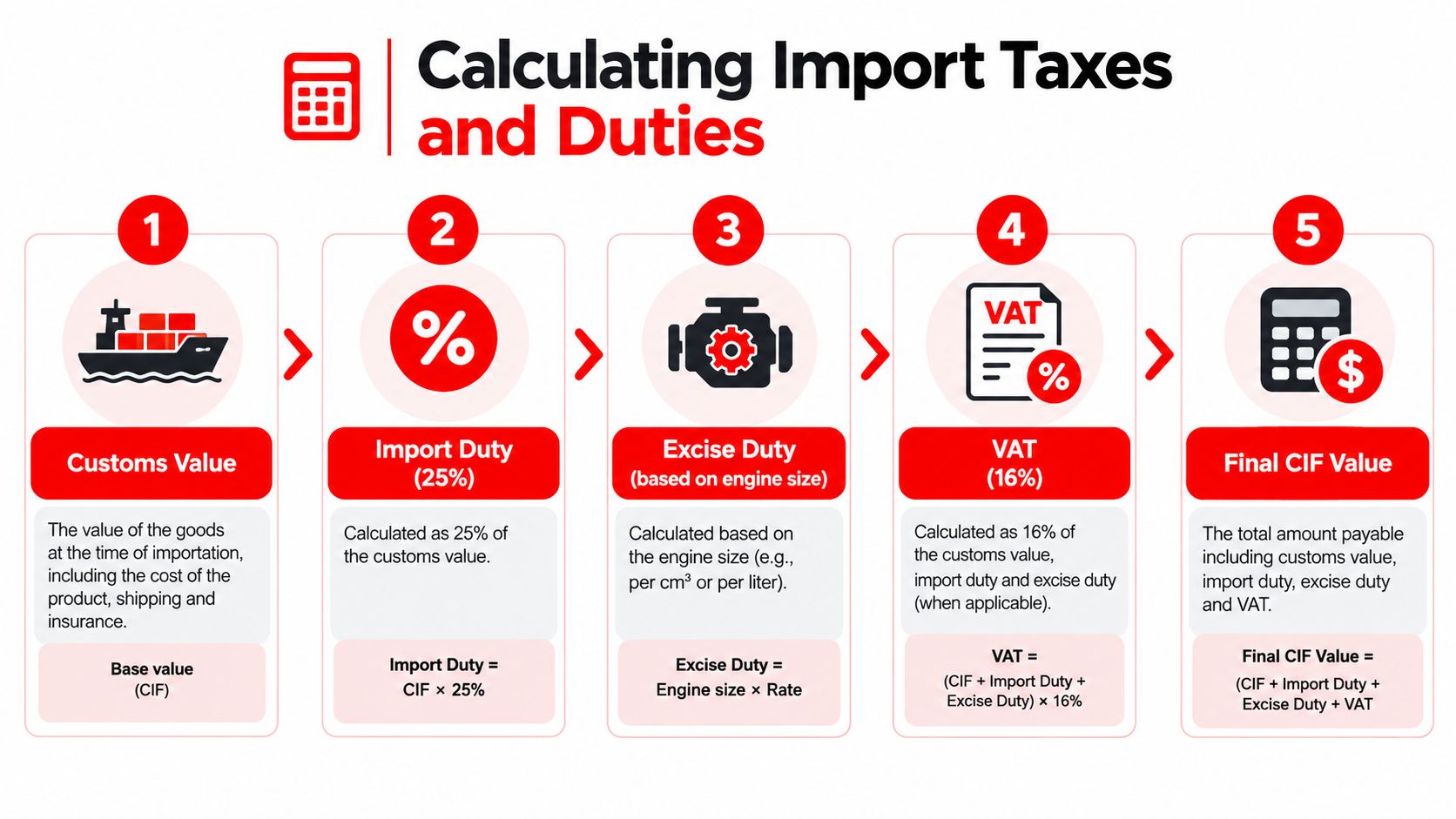
Imported RVRs should be priced from CIF, not from the auction or FOB figure alone. Kenya Revenue Authority guidance says import duty is 25% of CIF, excise duty is 20% of CIF plus import duty for vehicles of 1,500 cc or below and 25% for vehicles above 1,500 cc, VAT is 16% of CIF plus import duty plus excise duty, Import Declaration Fee is 3.5% of CIF, and Railway Development Levy is 2% of CIF (KRA motor vehicle import procedures). Most RVR examples are 1,800 cc, so the higher excise category is usually the one to check, although customs classification still has to be confirmed.
How the bill grows
The tax base changes at each step. KRA also notes that customs valuation may use the vehicle's Current Retail Selling Price, so the invoice figure is not always the one used for tax assessment (KRA importation guidance). That is one reason buyers get surprised when a foreign-used unit that looked affordable on paper becomes expensive at the port, see our guide to imported cars for sale in Kenya for the full landed-cost picture.
A simple model makes the order easier to follow. If CIF is treated as 100 units, duty is added first, excise is calculated on the new subtotal, VAT is calculated on the next subtotal, and IDF and RDL are added after that. KRA's FAQ shows the combined effect is already sizeable before registration, port handling, storage, transport, and clearing costs enter the picture (KRA FAQ on motor vehicle taxes).
That is why an imported RVR needs a separate landed-cost sheet. If you do not see one, you are not seeing the true price.
Landed Costs Versus Advertised Prices
The advertised number is only the starting point. A foreign-used RVR can look cheaper than a locally registered one until you add duty, excise, VAT, IDF, RDL, port charges, inland transport, registration, and the dealer or clearing margin. Once those elements are added, the apparent bargain can disappear fast.
A low sticker price is not a low ownership cost if the car is still sitting outside the registration system.
What actually changes the total
The cleanest way to compare cars is to place the headline listing price on one side and the landed or on-road figure on the other. For imported units, that landed figure should include the statutory charges and the logistics that move the car from arrival to your driveway. For locally registered units, the asking price usually reflects a more complete ownership position, which is why the comparison is not like-for-like.
That is also why an imported unit with a lower first quote may still end up dearer than a local one with a higher sticker. The buyer pays for certainty, paperwork completion, and road readiness. In the Kenyan market, those are not small details, they are the difference between a car you can drive and a car you still need to finish funding.
A useful habit is to ask for the breakdown in writing. If a seller will only speak in one lump sum, the transaction is not transparent enough for a disciplined buyer. For more context on how badly a cheap first quote can mislead, the same logic applies across used-car budgeting, not just with one badge or one model family. The broader principle is the same as in a clear budget comparison for a used-car price guide, where the sticker price never tells the full story on its own.
Evaluating Local Used Versus Foreign Used
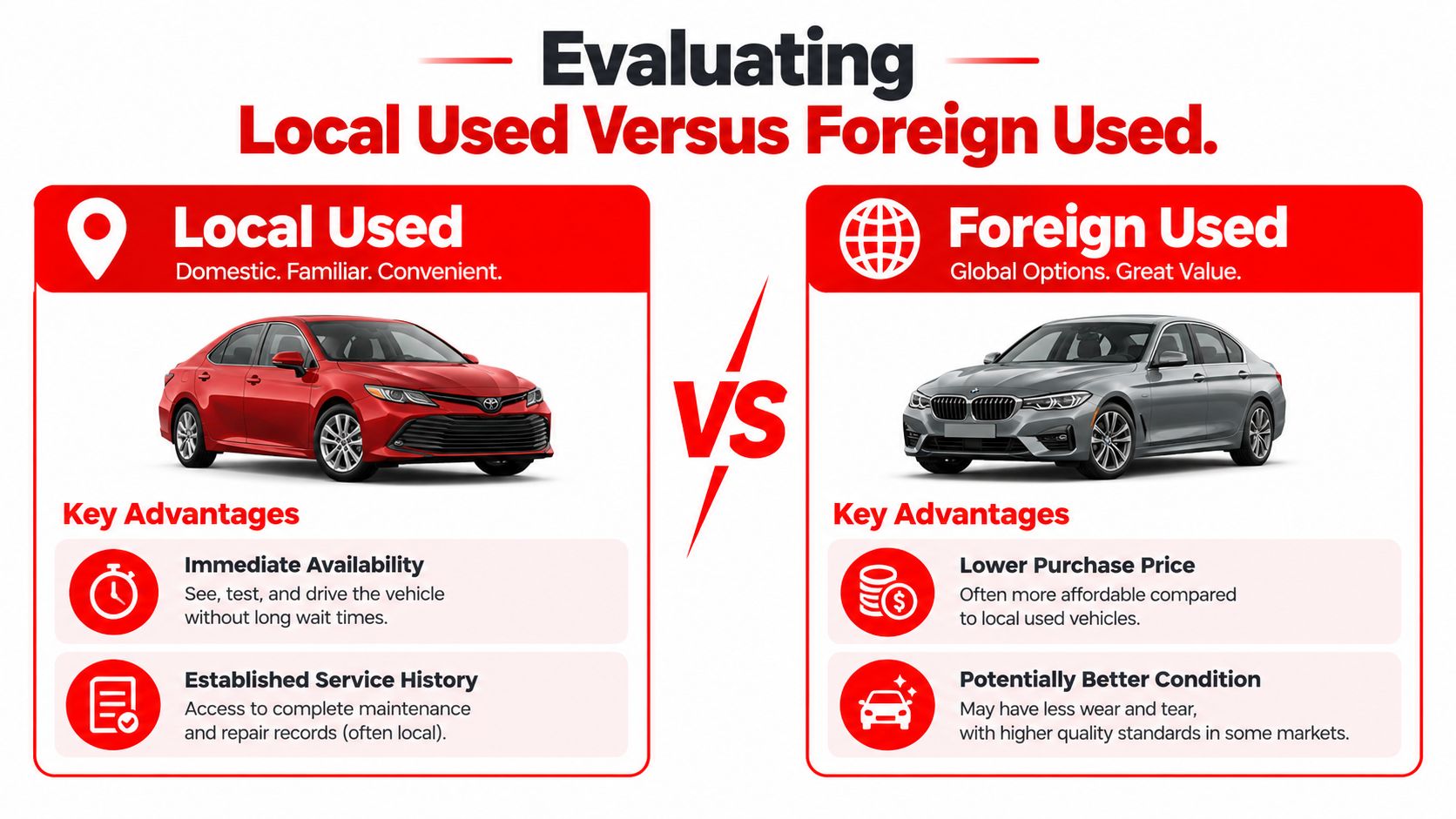
Local used and foreign used RVRs solve different problems. A locally registered car is easier to inspect, easier to transfer, and usually easier to budget for because the ownership trail is already in Kenya. A foreign-used car may be newer and cleaner on paper, but the buyer takes on more uncertainty around clearing, duty, and final cost.
Which type suits which buyer
A local used RVR works better for someone who wants quicker delivery and a more visible history. You can inspect the body, listen to the engine cold, and check how the transmission behaves in traffic before money changes hands. That makes the process more predictable.
A foreign-used RVR suits the buyer who is comfortable with import lead times and paperwork, and who values a later model year more than immediate road readiness. The risk is not that foreign-used cars are always bad, it is that the condition can be harder to verify until the car is already in the country. When that happens, the buyer has less room to negotiate on faults that should have been priced in earlier.
For shoppers comparing locally used stock within the Mitsubishi range, Brill Motors' locally used Mitsubishi stock is a practical starting point because it keeps the discussion anchored to vehicles already registered or ready for inspection. The main point is simple, a higher sticker price can still be the safer budget decision when it removes import uncertainty.
Essential Inspection Checklist for Buyers
An RVR can look tidy in photos and still need money after purchase. Before paying, check the suspension for knocks, examine engine mounts for vibration at idle, and look at the four-wheel drive system if the unit is a 4WD version. Uneven panel gaps, overspray, and mismatched tyres are all signs that deserve a harder question.
What to inspect on the spot
- Cold start behaviour: The engine should start cleanly, idle steadily, and settle without rough shaking.
- Suspension and steering: Listen for clunks over bumps and feel for wandering on a straight road.
- Body condition: Check for repainting, rust on exposed edges, and signs of accident repair.
- Transmission response: Gear changes should feel smooth, not delayed or jerky.
- 4WD engagement: If fitted, confirm it engages and disengages as expected.
- Service evidence: Ask for receipts, service stamps, and any recent maintenance notes.
A short drive tells you more than a long conversation. If the seller avoids a proper test drive, that is already useful information. You are not just buying a badge, you are buying a machine that should feel consistent under load, at idle, and in stop-start traffic.
Completing Vehicle Transfer on eCitizen
Once the car passes inspection and the price is agreed, the paperwork has to be done correctly. The seller must start the transfer on the NTSA service portal through eCitizen, add the buyer's details, and upload a clear coloured scan of the original logbook where requested (NTSA transfer process guidance).
What the buyer should confirm
The buyer then signs in to their own eCitizen account, opens the pending transfer notification, and accepts the consent request before NTSA can process the change of ownership. That step sounds simple, but it is where many careless deals go wrong because the buyer assumes the seller has already handled everything.
Before paying or taking possession, confirm that the logbook details, identity information, and KRA PIN details match the vehicle and the transaction. If those details do not line up, pause the deal until they do. Clean paperwork protects the buyer just as much as the engine condition does.
A well-priced RVR is still only a good purchase when the name on the logbook, the car in front of you, and the money leaving your account all belong to the same transaction.
Viewing Stock at the Garden City Showroom
A proper viewing settles doubts faster than messages and photos ever will. At Brill Motors' Garden City Mall rooftop car yard in Nairobi, you can inspect vehicles in person, ask for a valuation, and discuss trade-ins if you are replacing your current car. That face-to-face check is often the safest way to judge whether the condition matches the asking price.
When buyers want clarity on an RVR, a physical viewing still beats guesswork. It lets you compare body condition, cabin wear, and paperwork in one visit, instead of piecing the story together from separate calls.
Final Thoughts on Buying Your RVR
The strongest RVR deal is not the lowest sticker price, it is the one where year, origin, taxes, condition, and transfer paperwork all make sense together. Buyers who compare only the advertised figure usually miss the full cost of getting the car on the road. Buyers who demand a full breakdown make better decisions and avoid nasty surprises.
If you are shopping with a fixed budget, keep your eye on the total cost, not the headline number. That habit protects you whether you choose a locally used unit or a foreign-used import. The RVR rewards careful buyers and punishes rushed ones.
Brill Motors can help you compare RVR options, inspect stock at Garden City Mall, and work through valuation, trade-ins, and purchase support in one place. If you're ready to check current availability, visit Brill Motors and see what's on the yard today.