


 SIGN UP

The advice you hear most often is to take the cheapest Honda Fit that still drives. I would not. A low sticker with a weak hybrid battery, a doubtful odometer or papers that do not match the chassis usually costs more over two years than a dearer car with a clean file.
When I shortlist Honda Fit cars for sale in Kenya, I rank them by verified paperwork, hybrid battery health where it applies, and full landed cost, not by the advertised price alone. Two cars can share the badge and still differ by a decade of build, a different engine and a different right to be registered here.
Honda Fit Generations, Engines and Trims on Sale in Kenya
Match the badge to the generation before you compare prices. The name stayed. The car did not.
| Generation and model years | Import status in 2026 |
|---|---|
| First generation (GD), 2001 to 2007 | Locally used stock only, too old for import |
| Second generation (GE), 2007 to 2013 | Locally used stock only, too old for import |
| Third generation (GK), 2013 to 2017 | Locally used stock only, too old for import |
| Third generation (GK), 2018 to 2020 | Eligible for import, newest stock of this generation |
| Fourth generation (GR), 2020 onward | Eligible for import, newest stock |
What each generation usually offers
The GD (2001 to 2007) and the GE (2007 to 2013) are locally used cars. Both come with 1.3 L and 1.5 L petrol engines, typically in base, mid and top grades. Trim names change between listings, so confirm the exact grade from the advert and the import papers, not from the boot badge.
The GK (2013 to 2020) is the generation you will meet most often. Only the 2018 to 2020 cars can still be imported. The 2013 to 2017 GK stays on the locally used side. Petrol 1.3 L and 1.5 L engines continue, and hybrids show up properly in this generation and in the GR from 2020, which is the newest stock you can bring in.
From 1 January 2026 the allowable import threshold moved forward to 2018-and-newer vehicles, as set out in a USITC briefing on Kenya's automotive sector. Older GD, GE and early GK cars remain locally used stock.
What the two engines mean in traffic
Both sizes sit at or below 1,500 cc. KRA's guidance on importing a motor vehicle places vehicles at or below 1,500 cc in a lower excise category than larger cars. Confirm the current excise rate with KRA before you budget.
The 1.3 L is the calmer choice in stop-start traffic: less fuel, less urge. The 1.5 L pulls better on a steep road with passengers aboard. Neither size replaces a service history.
Write down the generation, the engine and the trim before you line two listings up. The same name can hide many years of build, and only some of those years can still enter as fresh imports.
Honda Fit Price Ranges by Generation and Condition
The cheapest Honda Fit can cost more to own if its paperwork is incomplete, its hybrid battery is weak or repairs erase the saving. Compare cars by condition and documentation, not by advert price alone. For a broader comparison, see this guide to Honda prices in Kenya.
| Generation and year band | Price guide | What moves the price |
|---|---|---|
| GD and GE, 2001 to 2013 | Older locally used cars; condition determines the asking price | Mileage, rust, accident and flood history |
| GK, 2013 to 2017 | Locally used cars; compare condition and paperwork | Trim, mileage, service records |
| GK, 2018 to 2020 | Compare the full landed cost with locally used alternatives | Petrol or hybrid, mileage, paperwork status |
| GR, 2020 onward | Newer stock; price depends on specification and condition | Hybrid battery health, mileage, trim |
What pushes a car inside its band
Mileage matters, but service records and inspection findings can change the value more. Accident or flood damage should reduce the price, while a higher trim is worth more only if its features work. For a hybrid, ask for a battery diagnostic report. Without one, do not pay a premium on the assumption that the battery is healthy.
What the advertised price leaves out
For a foreign-used Fit, distinguish the advertised vehicle price from the total amount payable to bring it into use. Freight, taxes, levies and inspection charges can affect the final bill. Ask for a written cost breakdown and confirm which charges have already been paid.
The KEBS PVoC manual states that used vehicles from countries without an applicable pre-export contractor may undergo destination inspection at 0.6% of approved customs value, subject to a minimum charge of USD 300. A vehicle arriving without a Certificate of Conformity or Certificate of Roadworthiness can be sent for that inspection. Check the paperwork and ask whether any inspection charges remain outstanding.
Practical rule: A price well below comparable cars deserves closer checks for mileage, damage and unresolved paperwork. A low advert is not a saving if repairs or unpaid charges erase the difference.
Compare the total cost, the documents and the inspection results. The lowest asking price is not necessarily the lowest-cost Fit to own.
Is the Honda Fit Right for Nairobi Roads
Yes, if you want a compact hatchback for tight parking, easy turns and short urban trips. It is a poor choice if you need a heavy family load every day or you will not check the hybrid system.
A compact Fit is built for the gaps Nairobi offers.
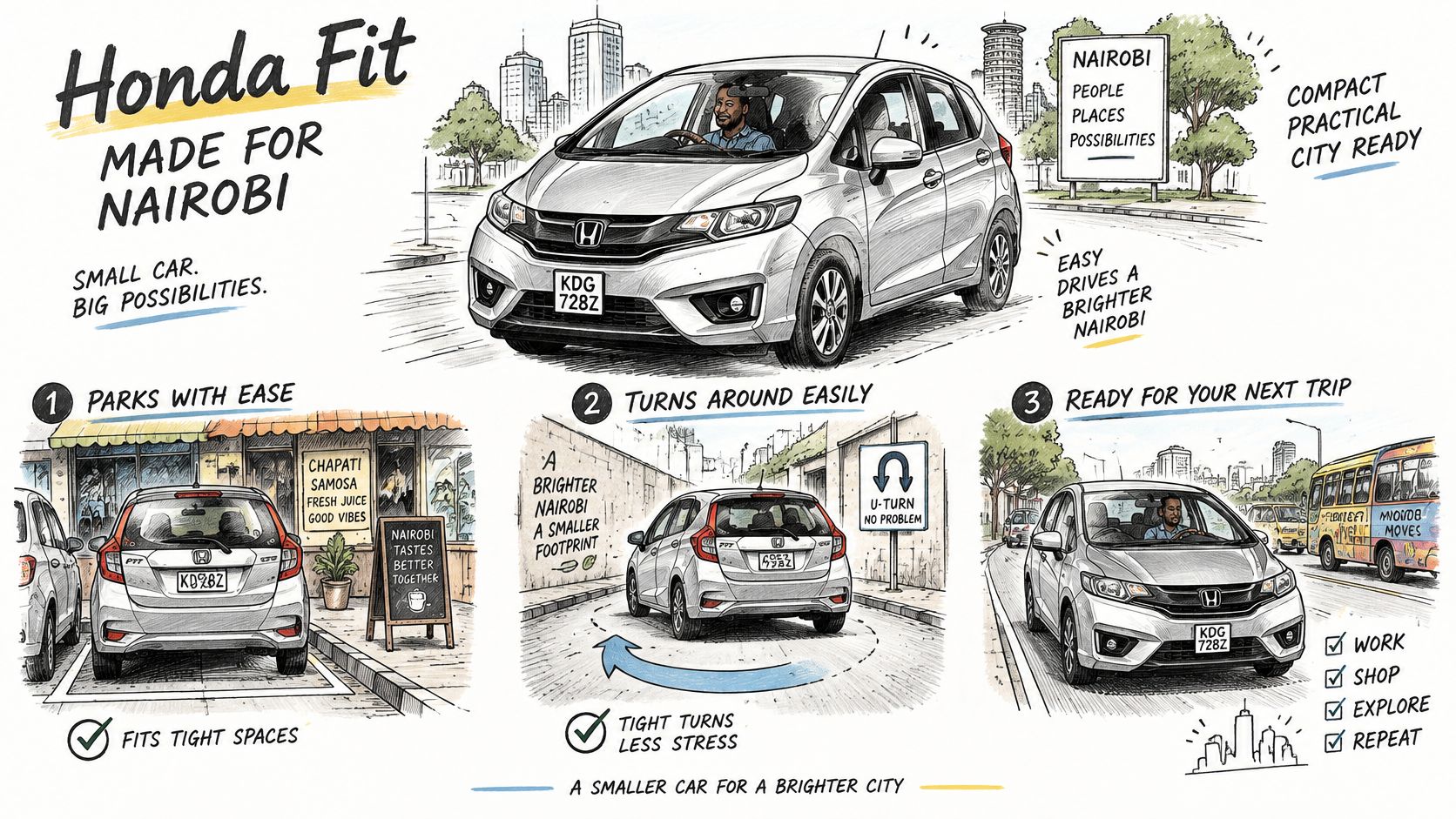
A Kenya used-car market assessment estimated that hatchbacks accounted for 42.36% of the country's used-car market in 2025, the largest vehicle-type segment in that analysis. The same assessment placed 2025 compact-hatchback and small-wagon volume at approximately 25,500 units, with the Honda Fit among the leading models, and it singled out the Fit, alongside the Toyota Vitz, for tight parking and lower running costs. That is demand, not a promise that every example is sound.
Petrol against hybrid over two years
Judge five things: parking and turning, fuel in traffic and on hills such as the climbs toward Limuru and Kiambu, luggage for a small family, how easily parts can be found, and what the car will cost to keep. Set fuel saved on a hybrid against a possible battery replacement, extra service and resale risk. There is no fixed payback. It depends on whether the battery and inverter are healthy.
A petrol Fit with a full service history can be the better buy for a low-mileage driver, because a hybrid's fuel saving only holds if the battery and inverter are healthy.
A higher price with verified mileage, clean import records and a documented service history often costs less over two years than the bargain with gaps in the file.
- Daily commuter: Prioritise the smallest turning circle and the best fuel use in traffic. A healthy 1.3 L petrol, or a hybrid with a clear battery report, fits this use.
- Small family: Prioritise luggage room and a rear seat that stays comfortable past a short hop. Check the boot with the buggy or the week's shopping, not with an empty car.
- High-mileage driver: Prioritise documented service history and a healthy battery or gearbox. Fuel economy does not help if the car spends the month in a workshop.
Import Eligibility and Documents to Verify
A Fit is legally usable in Kenya only after it passes the import tests. The advertised price is the small figure. Validation, a chassis that matches every paper, and a file that can reach destination inspection decide whether that cheap Fit stays cheap.
The Kenya Bureau of Standards PVoC manual requires an imported used vehicle to meet Euro IV emissions, and the gap between manufacture year and first-registration year must be less than one year. KEBS also states that vehicles showing evidence of a steering-side conversion are not permitted. A conversion is enough for registration to fail, even with a healthy-sounding engine. Demand that same file on any shortlist of imported cars for sale in Kenya.
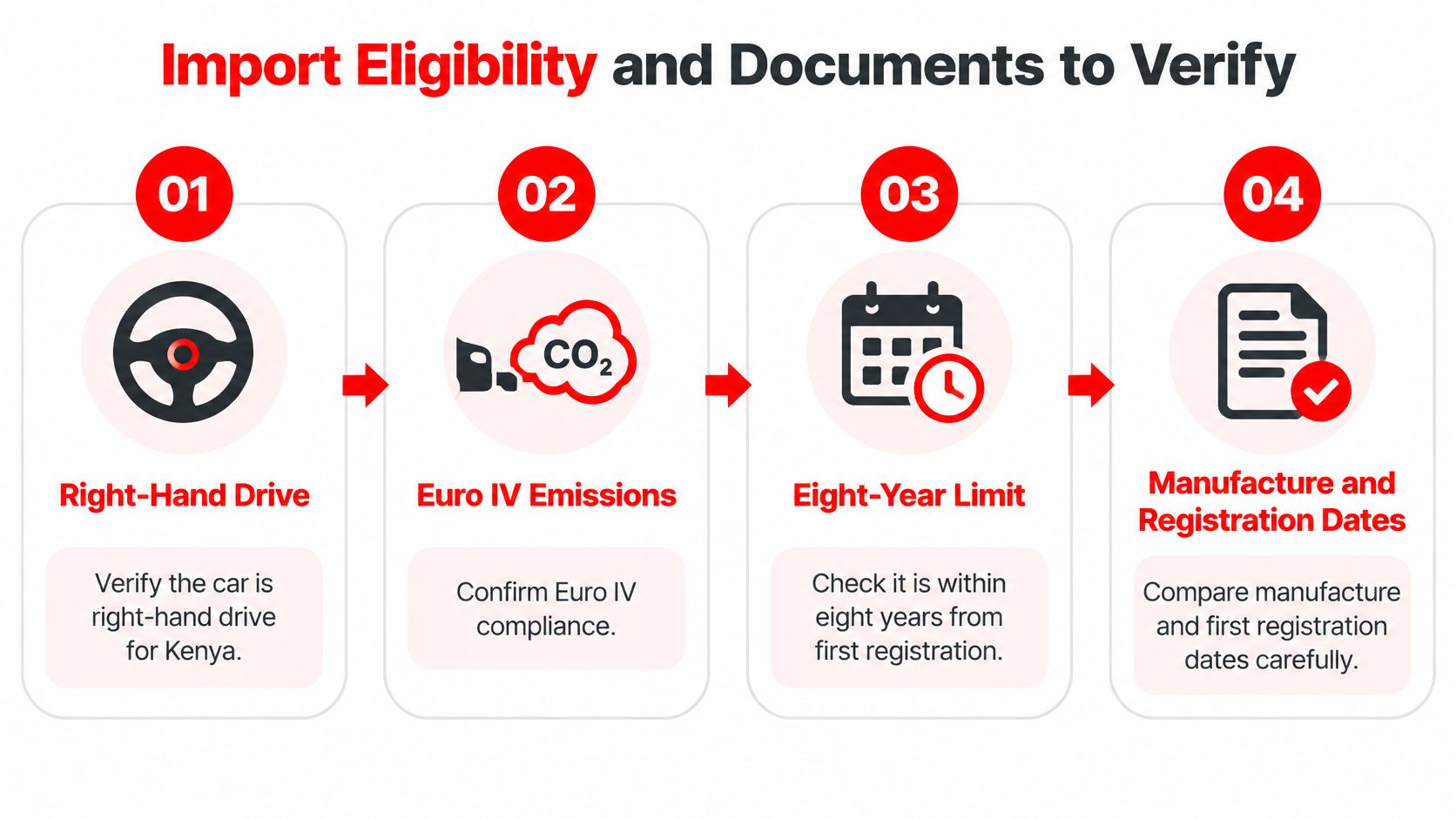
From 14 July 2025, the KEBS public notice on validation of used motor vehicles requires importers of used vehicles arriving without a Certificate of Roadworthiness to validate import documents before destination inspection. The foreign logbook, export certificate or deregistration certificate can support that check. KEBS states the validation fee is KSh 12,000 per vehicle, with a service timeline of within four working days, and only validated documents proceed to destination inspection.
Work through the file in this order, before any deposit.
- Confirm the first-registration year. Read it on the foreign papers. A file that offers only a build year leaves the age check unfinished.
- Confirm the steering position. The column and firewall should match the original layout. A patched firewall is a reason to stop.
- Request the foreign logbook and the export or deregistration certificate. These tie the car to its last market and support the validation check. A seller who cannot produce them is asking you to trust a story.
- Check KEBS validation status on the import documents. For a car that arrived without a roadworthiness certificate, look for the validation record before anyone talks about destination inspection.
- Match the chassis number across the import papers, the inspection records and the Kenyan registration documents. Different numbers mean you stop.
- Confirm the Certificate of Roadworthiness or the destination inspection outcome. The car is ready to register only when that result is in the file.
Two Fits with similar mileage and trim can carry very different registration risk. I treat missing or contradictory documents as a reason to walk away. The lower advert often costs more once validation, delay and a failed registration are on the bill.
Inspection Checklist for a Honda Fit Viewing
A low asking price can hide costs that make a Honda Fit expensive to own. Judge the car by its condition, the hybrid system's health and whether its papers are in order, not by the advert alone. For the viewing, check the car itself and its mechanical condition; the import paperwork checks are covered in the previous section.
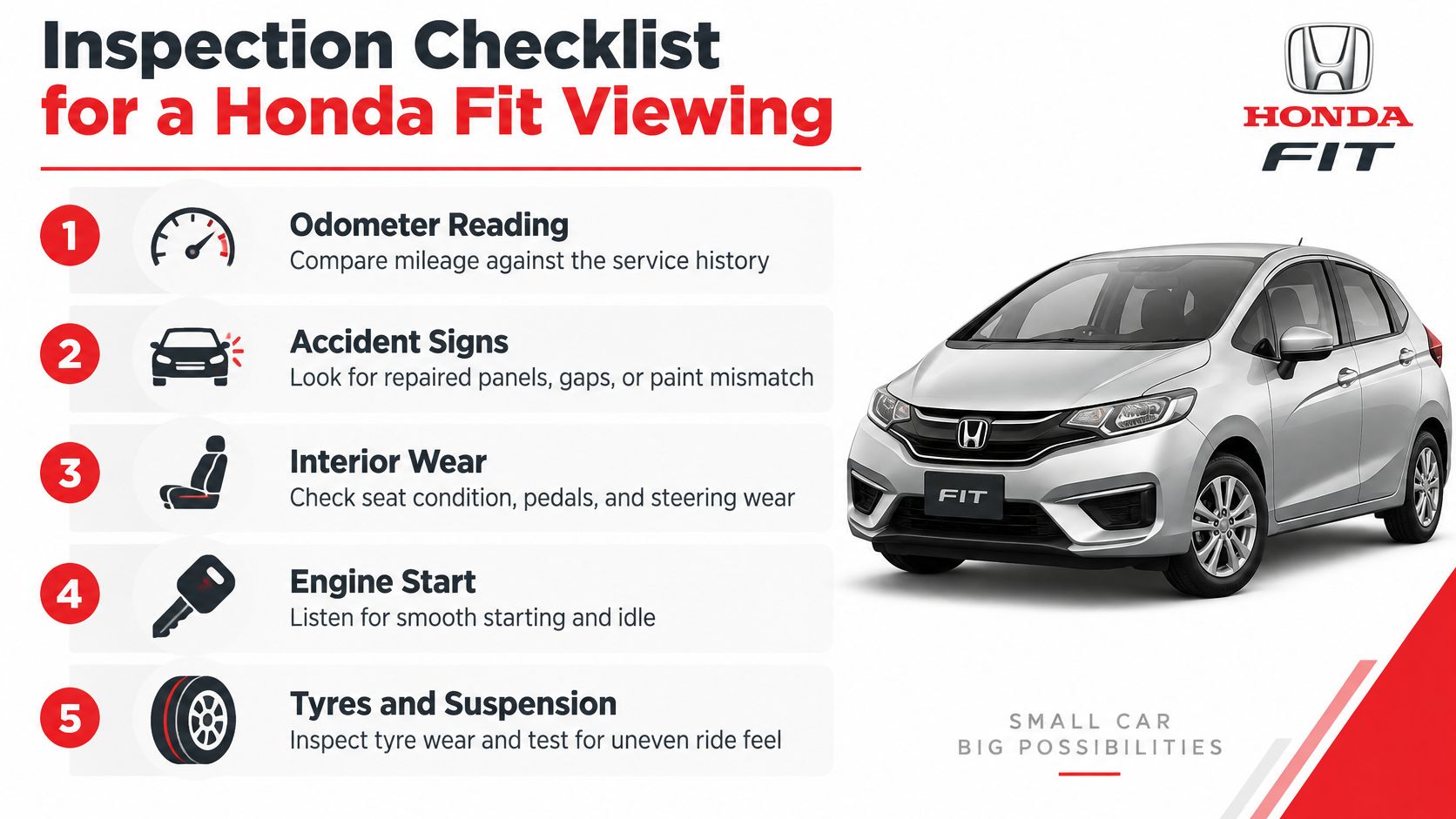
On the car
- Odometer against history: Compare the reading with service stamps. Low mileage alongside worn pedals or a polished steering wheel deserves closer scrutiny.
- Body: Check for repainting, uneven panel gaps around the doors and bonnet, and filler along the seams.
- Underside: Look for rust and fluid leaks beneath the engine and gearbox.
- Cold start: Warning lights should come on, then go out after the engine starts. Check that the car starts from cold.
- Gears and steering: During the test drive, gear changes should be smooth, and the car should track straight without pulling at the wheel.
- Tyres: Saw-tooth or one-sided wear can point to alignment or suspension trouble.
Hybrid and the drive
A hybrid needs a separate battery check. Look for battery or inverter warning lights on the dashboard and ask for a workshop diagnostic scan report. Do not accept a warning light being dismissed without a diagnosis.
Drive for about twenty minutes, including traffic and an incline. On a flat road, hold a steady speed; then apply load going uphill. Listen and feel for slipping, juddering or a gearbox that hunts for the right ratio.
Walk away if the hybrid has a warning light, the gearbox slips or judders, the underside has heavy corrosion, the car fails to start cold, or its papers do not agree. If the car passes these checks, an independent mechanic's pre-purchase inspection can help identify faults before you commit.
Negotiating, Trade-Ins and Selling Your Current Car
Negotiate against the car's condition and the paperwork, not the advertised price alone. A hybrid battery issue, worn tyres or a juddering gearbox can turn a low asking price into a costly purchase. Use the inspection findings to explain your offer.
Before agreeing on a figure, check the documents against the guidance in the import and paperwork section. Keep the agreed price and any conditions in writing.
A trade-in
Get a valuation for your current car before settling on the Honda Fit's price. Bring its logbook and service records, and provide recent photos of the exterior, interior and instrument cluster. Check that the written valuation accounts for visible damage, then confirm how that amount will be applied to your next purchase.
If you are selling
You can sell your car to Brill Motors directly, or ask Brill Motors to find a buyer and manage the sale. A trade-in suits you if you want to put the value toward your next Fit. A direct sale may suit you better if you are not buying immediately. In either case, share the logbook, service history and an honest description of faults so the valuation reflects the car's condition.
Keep the written terms, vehicle details and payment receipts together. If a concern arises after the sale, contact Brill Motors using the details listed on its site. If it remains unresolved, the parties may attempt mediation or use any complaint, regulatory or court process available under Kenyan law.
Visit Brill Motors to Shortlist Your Honda Fit
An advertised price tells you nothing about the hybrid battery or the paperwork behind the car, so the last step is seeing your shortlist in person. Brill Motors has a showroom at Garden City Mall in Nairobi, and you can browse the current stock online before you book a viewing.
When you enquire about a specific Fit, ask about financing through our partner banks, a valuation on the car you already own, a trade-in, or a direct sale if you are not buying yet. Both locally used and foreign used cars appear in the listings, so compare like for like on paperwork and landed cost rather than on asking price alone. That is where the cheap Fits get expensive, and where a well-documented one earns its premium.
Call or WhatsApp +254 758 243 058 to book a time at the showroom. Start with the current listings at Brill Motors.