

 SIGN UP
A used Subaru BRZ in Kenya usually starts around KSh 1,675,000 for older 2019 imports and can move past KSh 4,000,000 once year, condition, trim, and tax treatment are factored in. The actual price is shaped heavily by import taxes, so the headline figure is only the first number you should look at.
That's the mistake many buyers make on their first sports-coupe hunt in Nairobi. They see a neat asking price, then clearance, duty, and registration arrive and change the whole conversation.
What to Expect When Buying a Subaru BRZ in Kenya
A young professional walks into a yard in Nairobi with a fixed budget and a picture in mind, a sleek two-door car for weekends, evenings, and the occasional spirited drive. The BRZ fits that brief well, but the first thing that changes the budget is not the car's shape, it's the landed cost. For Kenyan buyers, the subaru brz price in kenya is rarely a simple showroom figure, because import costs sit on top of the vehicle's value and can move the total far beyond what the car appears to cost at first glance.
The BRZ is a niche sports coupe, not a family saloon, so it sits in a different pricing bracket from the cars that buyers cross-shop every day. That matters because the same model can look affordable in a listing and still become a serious commitment once statutory charges are added. If you want a cleaner starting point, browse the current Subaru range at Brill Motors, then compare it with what a BRZ buyer would ultimately pay after clearance and registration.
Practical rule: never judge a BRZ by the asking figure alone, judge it by the amount you'll need to put on the road.
The safest way to think about the car is this, the purchase price is only the first layer. The tax structure, the model year, the trim, and whether you are looking at CIF or a fully registered car all change the final answer. That's why two cars that look similar on paper can land in very different spending brackets in Nairobi.
Subaru BRZ Price Ranges Across Model Years
Used BRZ pricing in Kenya shifts sharply with model year, mileage, and trim. A 2019 example can show up around KSh 1,675,000, KSh 2,002,000, KSh 2,269,000, or KSh 2,342,000 at CIF Mombasa, while 2023 units can appear around KSh 2,609,000, KSh 2,728,000, KSh 2,838,000, and KSh 2,903,000. A 2024 BRZ is listed at KSh 2,759,000 in the same CIF context, which is a useful reminder that newer stock does not just move upward by age, it also moves with condition and specification.
What the spread tells you
The gap between those figures is wide enough to matter. Two BRZs with the same body style can differ by more than KSh 1 million depending on year and condition, which is a substantial premium in the Kenyan used-car market. Older 2000cc cars remain materially cheaper, while newer 2400cc variants and cleaner examples push the number up.
A broader Kenya price view places the model around KSh 2,046,000 to KSh 4,325,000, depending on year, mileage, trim, and whether the figure reflects CIF or retail pricing. That range is useful because it shows how easily the BRZ moves from a bargain-seeming used import into a more expensive finished car once local costs are added.
| Model year | Typical Kenya CIF or market position |
|---|---|
| 2019 | About KSh 1.675 million to KSh 2.342 million |
| 2023 | About KSh 2.609 million to KSh 2.903 million |
| 2024 | About KSh 2.759 million |
The practical lesson is simple, low mileage and newer model years command the premium, and the premium is real. If you're shopping carefully, focus less on the prettiest ad copy and more on how the year, engine, and condition line up with the budget you truly want to spend.
How Import Taxes Shape Subaru BRZ Costs
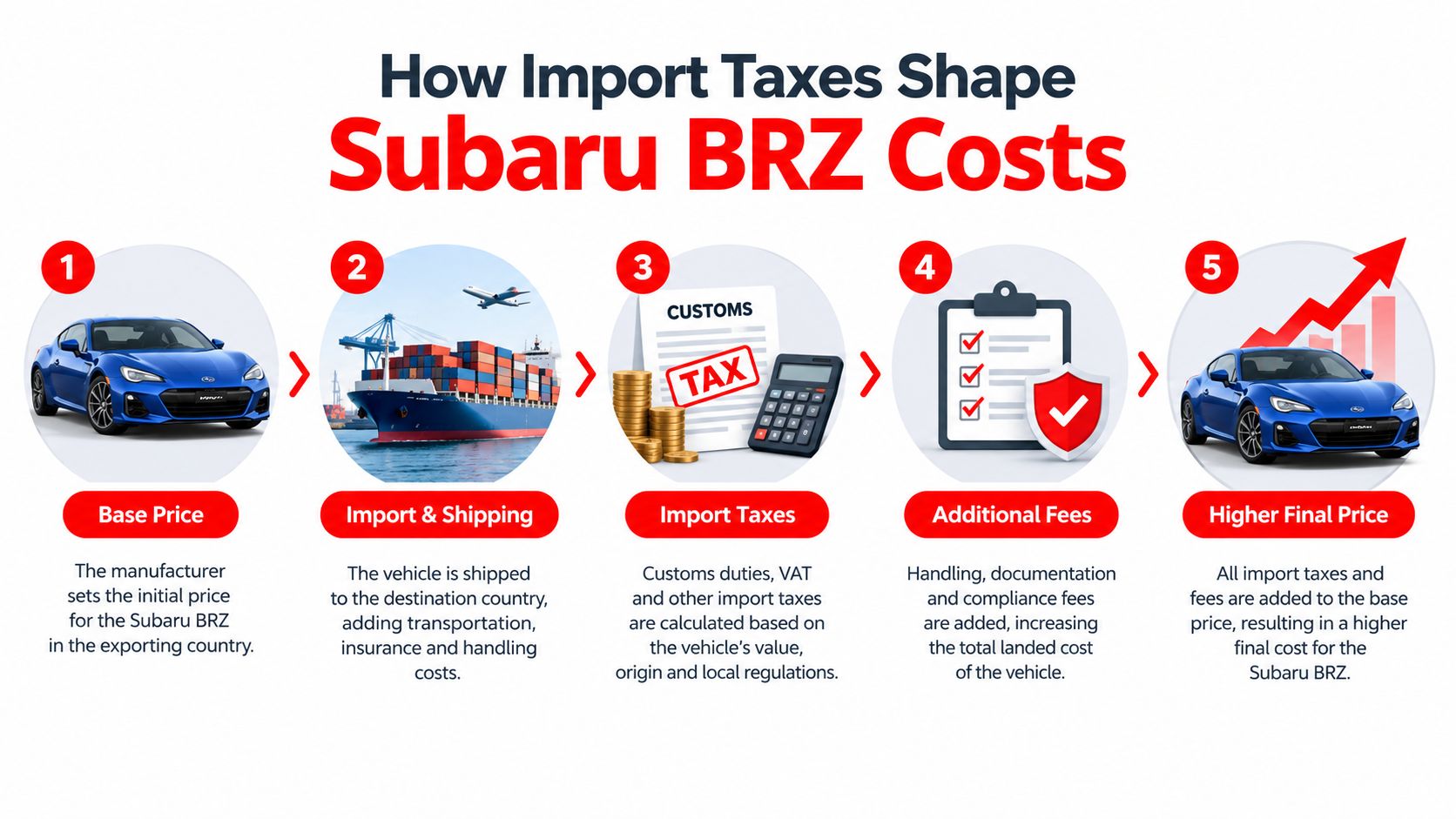
KRA's motor-vehicle import guidance makes one thing very clear, the tax bill is built on customs value, and customs value is tied to the vehicle's CRSP benchmark. Under the published guidance, import duty is 25% of CIF, excise duty is 20% of CIF plus import duty for vehicles at or below 1500cc, VAT is 16% of CIF plus duties, and additional levies include IDF and RDL. For a sports car buyer, that means the quoted price is never the whole story.
Why engine size changes the answer
The BRZ's engine size matters because it influences how the vehicle is treated in the tax structure. Even where the exact excise treatment differs by engine category, the guiding principle stays the same, the larger and newer the car, the more sensitive the landed figure becomes to statutory charges. KRA's 2026 guidance also lists 25% import duty, 20% excise for vehicles with 1,500 cc and below and 25% above 1,500 cc, 16% VAT, 3.5% IDF, and 2% RDL.
That is why a BRZ in Kenya is a landed-cost problem, not a sticker-price problem. The car itself is only one layer, then the clearance process adds duty, excise, VAT, and levies before the vehicle is ready for use. A buyer who ignores that sequence often ends up comparing the wrong numbers.
A clean CIF quote can still become an expensive Nairobi car once the duties are added.
The most useful habit is to ask whether a figure is CIF-only, landed cost, or fully registered. Those are not the same thing, and confusing them is how buyers overpay or budget poorly. For the official procedure and current rates, confirm directly with KRA's motor vehicle importation guidance.
From CIF Value to Landed Nairobi Price
A BRZ reaches its final Nairobi price in stages. First comes the CIF Mombasa figure, which is the base import value used for tax calculation. Then come the statutory charges, followed by freight beyond the port, registration costs, and any dealer margin if you're buying a ready-to-drive unit.
The cost ladder buyers should keep in mind
- CIF value, this is the starting point for tax computation and usually the figure that matters most during import planning.
- Import duty and excise, these are applied according to customs rules and engine category.
- VAT and levies, these are added on top of the taxable base.
- Port and inland costs, these can include movement from Mombasa and other handling expenses.
- Registration and road readiness, the car is only “yours” after the paperwork clears.
A buyer looking at a low CIF figure can be misled into thinking the BRZ is within reach when the true outlay is still coming. That's why the most honest comparison is not “What's the car listed at?” but “What will I pay to park it in Nairobi and drive it legally?” The difference is often enough to change the trim you choose or the year you target.
For a sanity check on how a mainstream model price list is organised in a Kenyan dealership context, see Brill Motors' Toyota car price list. It helps buyers understand how market pricing and road-ready pricing diverge in practice.
Subaru BRZ Engine Options and Performance
The BRZ is built around a 2.4-litre horizontally opposed four-cylinder engine that produces 228 horsepower and 184 lb-ft of torque, with rear-wheel drive and either a six-speed manual or six-speed automatic depending on trim. That setup is exactly why the car feels different from ordinary daily transport, it is tuned for balance, response, and driver involvement rather than soft commuting.
What the engine means on Kenyan roads
The 2.4-litre layout gives the BRZ enough shove for relaxed overtakes and lively weekend driving without turning it into a heavy grand tourer. The rear-wheel-drive layout matters too, because it gives the car a more playful character and a more connected steering feel than most mass-market imports. For buyers who enjoy the act of driving, that character is the point.
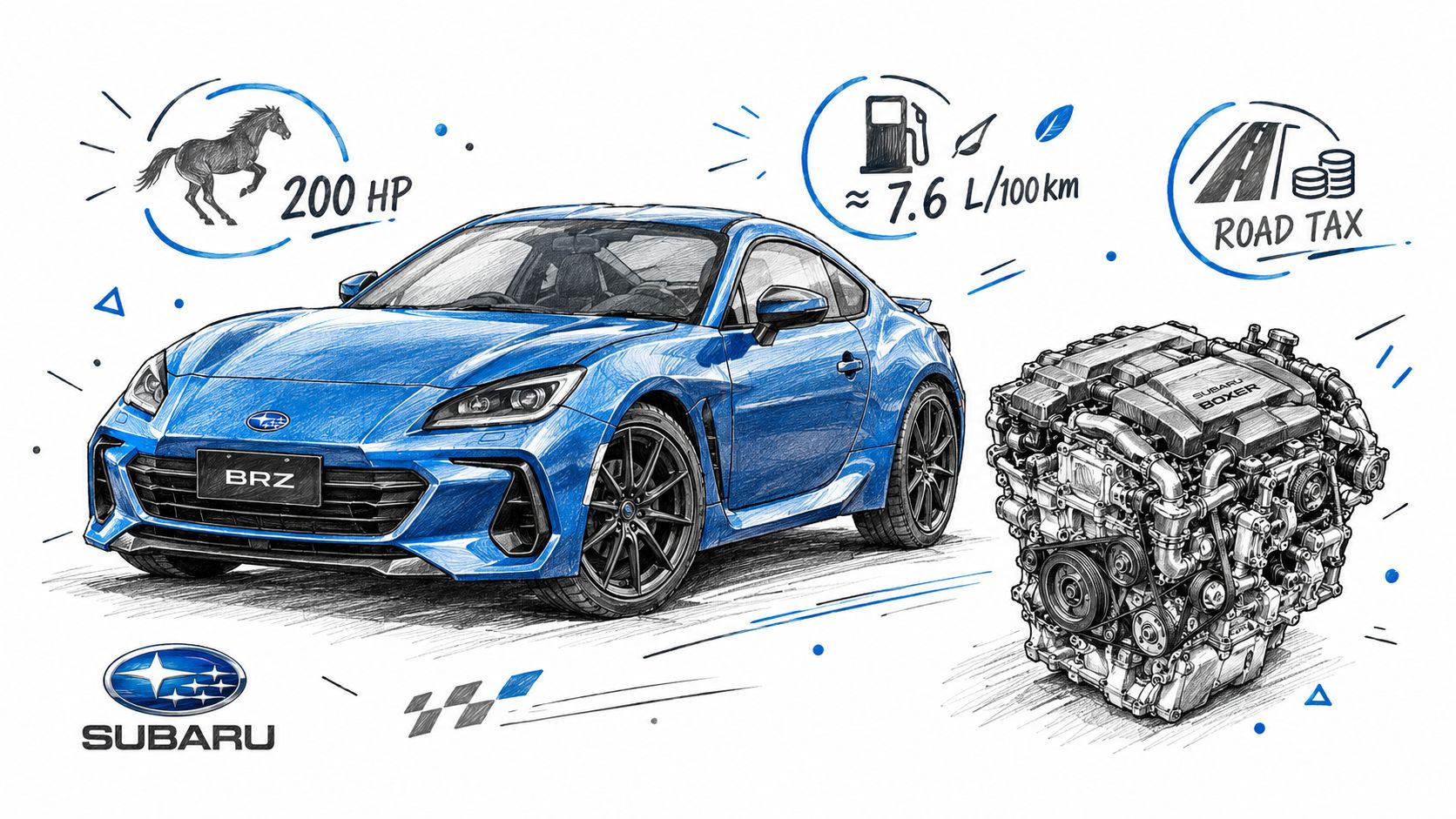
There's also a tax implication in the background. Larger displacement engines often attract different treatment from smaller cars, so the choice between trims is not only about feel, it's also about what the clearance bill will look like. For official manufacturer details on the powertrain, see Subaru's BRZ specifications.
Driving note: the BRZ rewards a buyer who wants balance and precision more than straight-line drama.
In practice, that makes the BRZ a car for enthusiasts who value the chassis as much as the engine. If you want a machine that feels alive at sensible road speeds, the BRZ earns its keep here.
Running Costs You Should Budget For
The BRZ is not just a purchase, it's a running commitment. Subaru specifies premium unleaded gasoline for the engine, and fuel consumption is listed at 27/20 mpg highway/city with the manual and 30/21 mpg highway/city with the automatic. Those figures give you a sensible reference for planning, even before you factor in Nairobi traffic and the way real ownership usually varies from brochure numbers.
What tends to cost more on a sports coupe
Fuel is only one part of the bill. Insurance is usually higher on sports coupes than on ordinary family cars, and the same goes for tyres and brake components because the car invites firmer use. Servicing also matters, especially if the car has been imported recently and you want to know whether the maintenance history is consistent.
A good owner thinks in monthly terms, not just purchase terms. If the car will sit in traffic through the week and do limited weekend work, the manual can still be rewarding, but the automatic may be the more relaxed daily choice. If you plan to drive hard, tyre and brake wear become more important than they are on a normal commuter car.
Budget for the car you'll actually drive, not the car you wish you'd drive.
The BRZ's fuel tank is 50 litres, which is a useful detail when you're planning fill-ups and trip range. For the official consumption and fuel requirement details, check Subaru's BRZ trim comparison sheet. The right budget is the one that leaves space for fuel, service, and wear items after the car is already on the road.
Comparing Subaru BRZ Model Years in Kenya
Year-to-year comparison should start with the landed-cost decision, not the headline price. A 2019 BRZ may suit a buyer working with a budget under KSh 2.3 million CIF, provided they accept higher mileage and allow room for inspection, repairs, and import charges. The CIF figure is only the customs valuation base, not the amount required to put the car on Nairobi roads.
A 2023 or newer model makes more sense for buyers who prioritise lower mileage and the newer 2.4L driving experience. Expect KSh 2.6 million+ CIF, plus higher excise and the other taxes and fees applied during importation. That larger starting value can push the final landed price well beyond the gap shown in overseas listings.
A practical model-year decision
| Buyer priority | More suitable choice | Main trade-off |
|---|---|---|
| Lower initial CIF | 2019 | Higher mileage and potentially more refurbishment |
| Newer condition | 2023+ | Higher CIF, excise, and total landed cost |
| Maximum budget flexibility | Earlier year with verified history | More funds may be needed after arrival |
| Reduced age-related risk | Newer year | Less cash left for taxes, registration, and accessories |
Age alone should not decide the purchase. A well-documented earlier car can be a safer buy than a newer import with unclear history, poor repairs, or an unattractive tax position. Compare the auction or purchase value, CIF, estimated taxes, and local preparation cost on one worksheet before committing.
Ownership rule: choose the model year that leaves money for landing and preparing the car, not simply the year with the newest badge.
Once costs are aligned, compare condition first, then trim and year. That order gives a clearer view of value and reduces surprises after the BRZ reaches Kenya.
Inspection Checklist and Required Paperwork
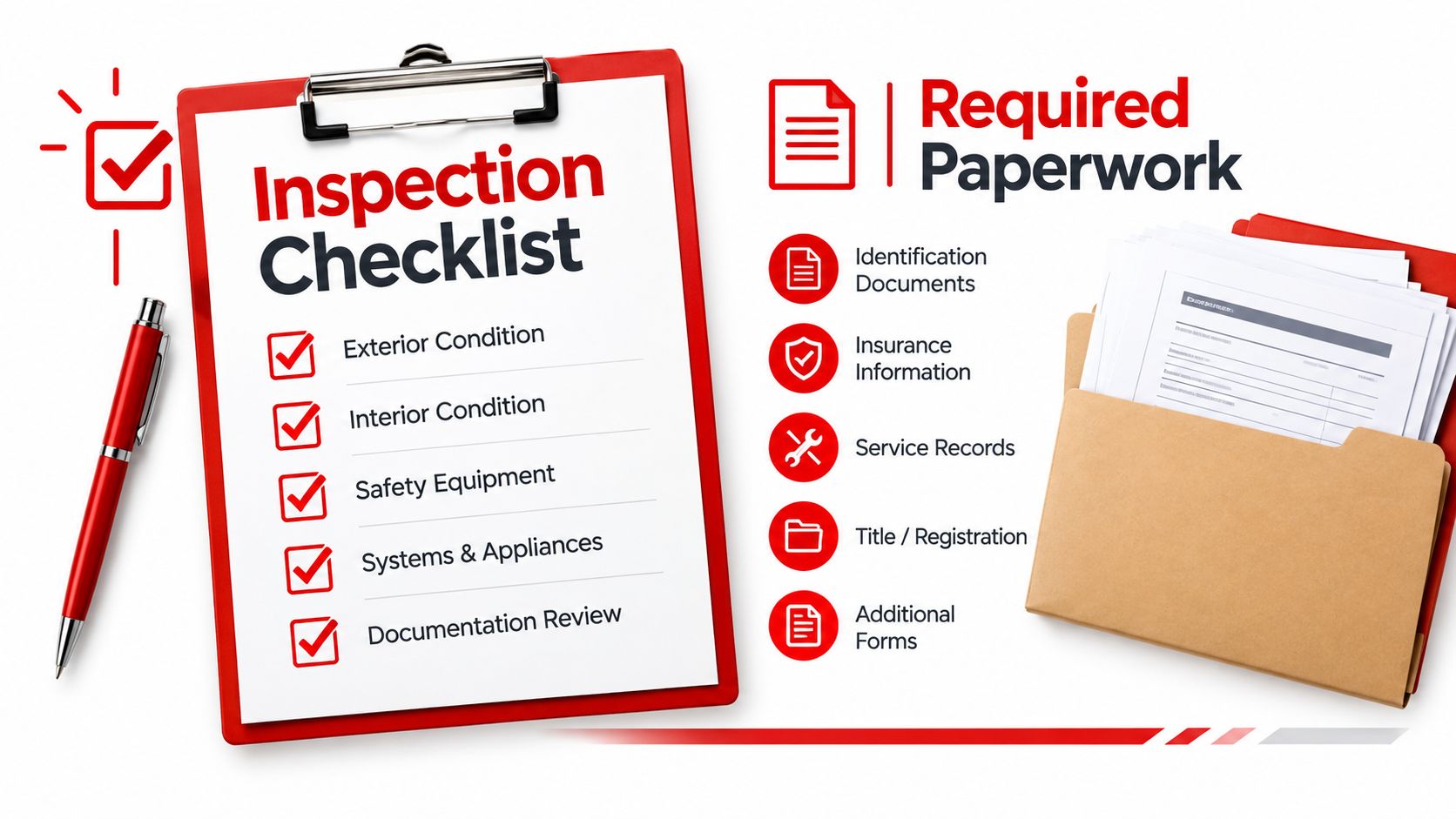
A BRZ can look sharp and still hide expensive problems. Start with the tyres, brakes, suspension feel, and any evidence of underbody scraping, because low sports cars often take more punishment than buyers expect. Then check the engine bay for leaks, uneven idle, warning lights, and signs of rushed repairs.
What to verify before money changes hands
- Service history: ask for records that show oil changes, brake work, and any gearbox attention.
- Chassis condition: inspect for accident repair, paint mismatch, and panel gaps.
- Interior wear: a tidy cabin can still hide hard use, so test every switch and control.
- Paper trail: confirm import documents, ownership records, and registration details.
- Compliance checks: verify the paperwork required by KRA and NTSA before transfer.
For paperwork and import compliance, the safest route is to confirm the current requirements directly with the relevant authorities. That includes the import record, registration trail, and any documents needed to complete transfer and road use. A buyer who skips this step may save a little time upfront and lose much more later.
If you're sourcing through a dealership environment, ask every direct question at the viewing stage instead of after the deposit. You want the story of the car, not just its appearance. A clean file is just as important as a clean bonnet.
Tips for Buying a Subaru BRZ at Brill Motors
A serious BRZ buyer should arrive with three questions ready, what's the year, what's the import history, and what does the paperwork show. If the car is on site, spend time looking at cold-start behaviour, tyre wear, and the cabin finish before you get carried away by the styling. Ask whether the unit is available for inspection at Brill Motors contact and whether the dealership can explain the car's condition clearly.
The smartest viewing habits
- Start cold: a car that starts from cold tells you more than one that has been warmed up for the visit.
- Check the steering feel: the BRZ should feel tight, not vague.
- Look at the tyres closely: uneven wear can point to alignment issues or hard use.
- Confirm the paperwork early: the cleanest car still needs the cleanest file.
- Ask about finance or trade-in options: if your current car has value, it may ease the step into a sports coupe.
Brill Motors also supports financing, vehicle valuation, trade-ins, and selling your car, which is useful if you want to move into a BRZ without juggling multiple transactions. The point is to keep the conversation grounded in the actual car, not just the badge. A good viewing should leave you clearer, not more confused.
Next Steps for Kenyan Subaru BRZ Buyers
If the BRZ is still on your shortlist, move from browsing to verification. Decide whether you want a later model with a higher CIF position or an older unit with a lower entry point, then match that choice to your real monthly budget. If you're selling first, a valuation can tell you how much ground you already have before you start shopping.
A sensible way forward
- View current stock and compare year, trim, and condition side by side.
- Request a valuation if your existing car will help fund the purchase.
- Inspect the paperwork before paying any deposit.
- Confirm the landed-cost logic with KRA or a licensed clearing agent if you're importing.
- Book an in-person viewing so you can judge the car properly, not just through photos.
The BRZ makes the most sense for a buyer who wants an engaging coupe and understands that the road to ownership is tax-driven as much as it is car-driven. If you get the numbers right before you commit, the car is much easier to enjoy later.
If you're ready to compare live stock, visit Brill Motors for current listings, valuation support, and trade-in help. You can also come by the Garden City Mall Rooftop Car Yard, Thika Road, Nairobi, to inspect a Subaru BRZ in person and talk through the landed-cost details before you buy.