

 SIGN UP
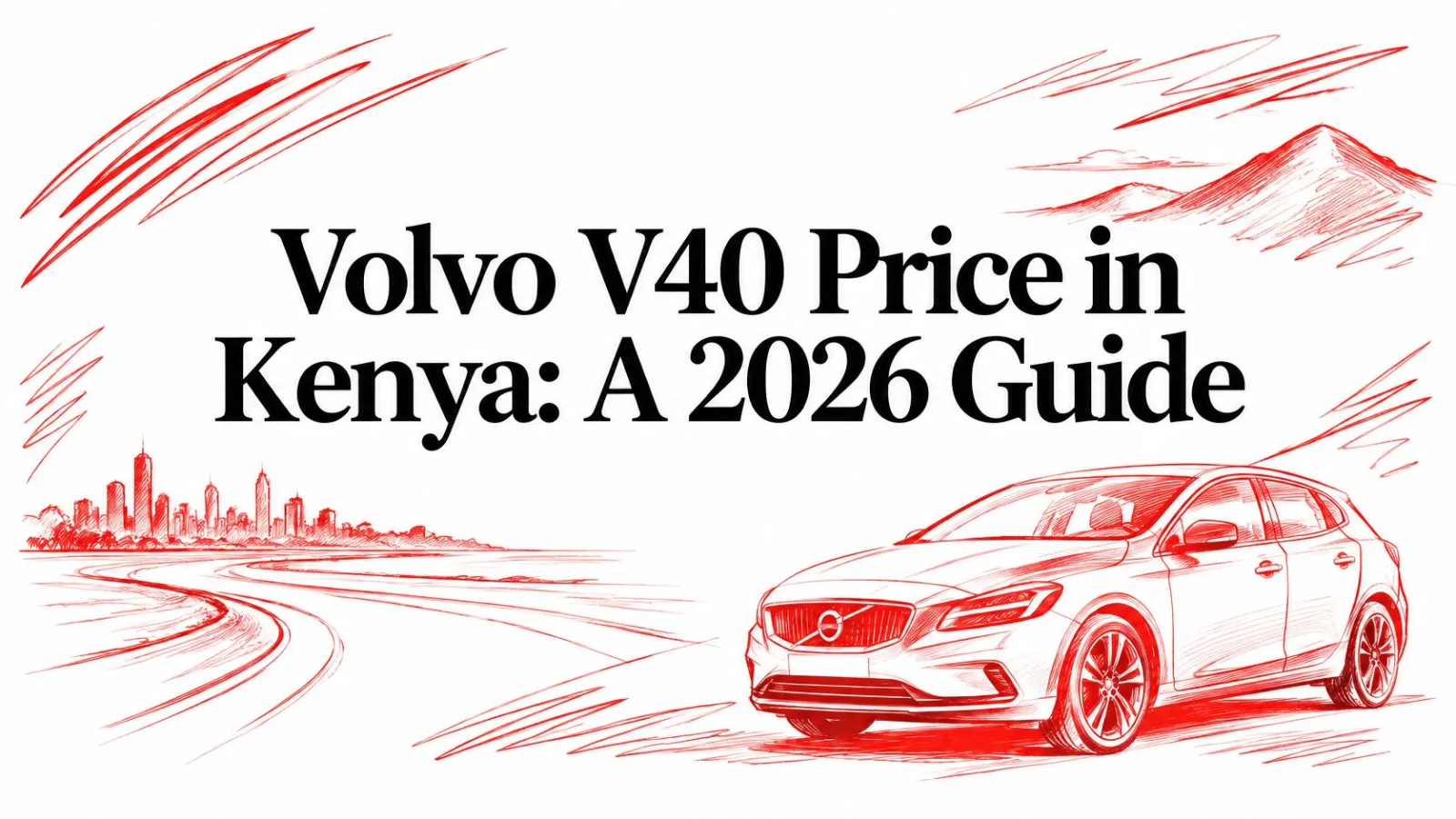
Many conventional used Volvo V40 hatchbacks are advertised in Kenya for about KSh 1.2 million to KSh 2.8 million. Cross Country versions and low-mileage examples can sit above that range.
Judge the asking price against the car's year, engine, mileage, service history and registration status. Keep enough of your budget for maintenance, and prioritise sound paperwork and condition over the lowest advertised price.
Typical Volvo V40 Prices in Kenya
Price guidance for a conventional used Volvo V40 needs to be consistent: the year and type set the starting band, while mileage, specification and condition explain where an individual car sits within it. Use the ranges below to frame your budget and judge an asking price. They are not verified market averages or completed-sale figures.
Start with the year and body type. A standard hatchback and a Cross Country are different comparisons, even when both carry the V40 badge.
Used Volvo V40 asking-price guide in Kenya
| Year and type | Typical asking guide | What usually sits in this band |
|---|---|---|
| 2015 conventional used | KSh 1.2 million to KSh 2.5 million | Earlier cars, including examples already registered in Kenya |
| 2016 to 2017 used | KSh 1.2 million to KSh 2.5 million | Mileage, trim and condition account for differences |
| 2018 to 2019 conventional | KSh 1.2 million to KSh 2.5 million | Hatchbacks with different mileages, equipment and registration histories |
| 2019 Cross Country | Price varies by specification and condition | Raised suspension and body protection distinguish it from a standard hatchback |
| Low mileage or premium condition | May sit above the conventional band | Service history and specification can support a higher asking price |
Use the band to ask better questions
The table gives you a starting point for negotiation. A car with a complete maintenance file may warrant closer consideration than a newer example with missing records. A tidy interior alone does not justify a premium if the gearbox needs work.
For a conventional hatchback, compare the asking price with the relevant year band. Ask the seller to support a higher figure with evidence such as credible mileage, documented servicing, sound mechanical condition and working equipment.
The same year can attract different asking prices. Trim, gearbox specification, previous repairs and whether the car is foreign used or locally used all affect how useful a comparison is. Match those details before deciding whether two adverts are comparable.
Budget rule: Ask for paperwork to support a high asking price, and a clear explanation for a low one.
Read unusually cheap or expensive cars carefully
A price below the guide does not by itself prove there is a problem. The owner may want a straightforward sale, or the car may have covered substantial mileage. Establish what explains the discount, then check whether the condition and paperwork justify the asking price.
At the other end, do not pay for cosmetic improvements as if they were mechanical refurbishment. New wheels, polished paint and a clean engine bay do not replace service and repair invoices.
Keep the purchase budget separate from the ownership budget. Spending everything on the car leaves no room to address faults promptly, a poor start with a turbocharged premium hatchback.
Find the row that best matches the vehicle. If its asking price sits well outside that guide, ask the seller to explain the difference through its specification, condition or included costs.
Factors That Move the Price
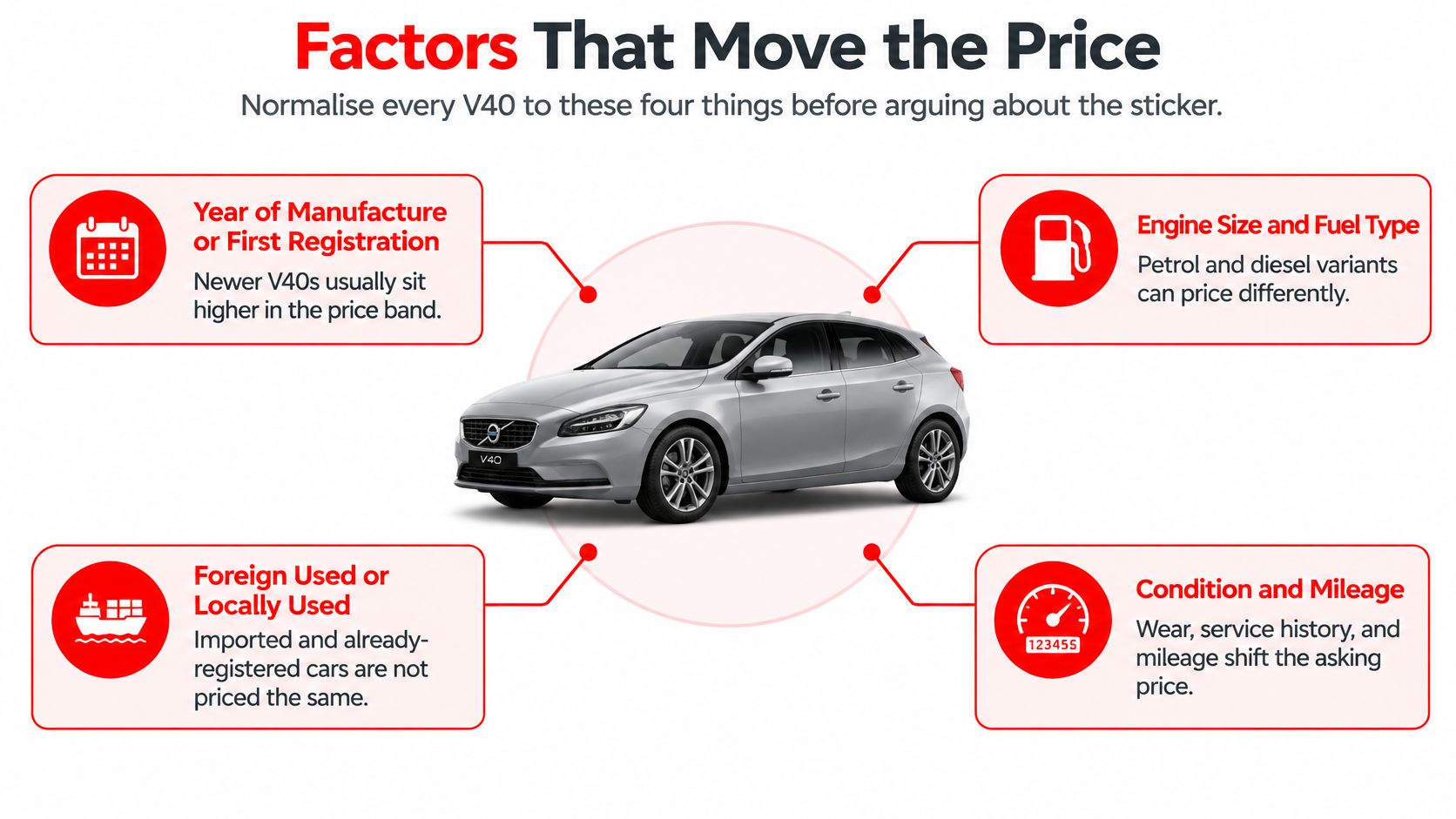
Before comparing asking prices, record each car's year, engine size, fuel type, import status and documented mileage. A year-and-trim price band gives you a starting point; these details explain why a specific V40 may sit above or below it.
The year sets the starting point. Trim, kilometres and maintenance records move the price within that range. A newer car can still be poor value if servicing has been neglected, while a low odometer reading means little without records to support it.
Check the engine behind the badge
T3 and T4 are not full engine specifications. Check the engine capacity, fuel type and gearbox against the vehicle documents and identification details. For example, confirm that the paperwork for a T3 automatic matches the engine and transmission in the car before judging its price or estimating import charges.
Engine capacity also affects taxation. The Kenya Revenue Authority's motor-vehicle import guidance distinguishes excise treatment for vehicles above 1,500 cc, so an engine difference can affect acquisition cost as well as driving character.
Compare equipment against its condition. A stronger engine, a desirable automatic specification and working safety equipment may support a higher price, provided the paperwork and inspection back up the claim. The Cross Country's raised stance and protective body treatment also set it apart from a standard V40 hatchback, so compare like with like.
Make mileage earn its premium
Use mileage as an inspection rule, not a price formula. I would only pay a premium below 80,000 km if the service stamps and invoices support the reading. Treat 80,000 to 140,000 km as a useful comparison range, and ask for stronger maintenance evidence above 140,000 km.
Check whether mileage agrees with service dates, pedal wear, seat condition and steering-wheel wear. A low-reading car with service gaps may be a worse buy than a regularly maintained V40 with higher mileage.
- For a premium: Require credible mileage records and documents that confirm the specification.
- For a discount: Ask a mechanic to identify wear or overdue work and price the repairs.
- For an uncertain history: Allow time for investigation before agreeing a figure.
Brill Motors' catalogue separates All Vehicles, New Vehicles, Used Vehicles, Foreign Used and Locally Used. Apply the relevant status filter when checking Volvo stock, so you compare a locally used car with a similar vehicle rather than with an import quotation.
Imported Cost Against a Locally Used V40
What a V40 price may still exclude
| Car status | What the advertised figure usually reflects | Costs still to confirm |
|---|---|---|
| Locally used and registered | Earlier taxes and first registration are already in the car's history | Transfer, plates where applicable, inspection, insurance and repairs |
| Foreign used, not yet cleared | Often a purchase or CIF-style figure before Kenyan tax | Duty, excise, VAT, levies, port, clearing and registration via KRA |
| Foreign used, already cleared in Kenya | Landed cost should be inside the asking price | Clearance papers, then transfer, inspection, insurance and repairs |
A lower foreign quote is not automatically a cheaper Nairobi car. Before comparing it with a registered vehicle, establish whether it represents the purchase price abroad, cost including shipping, or a cleared vehicle ready for registration.
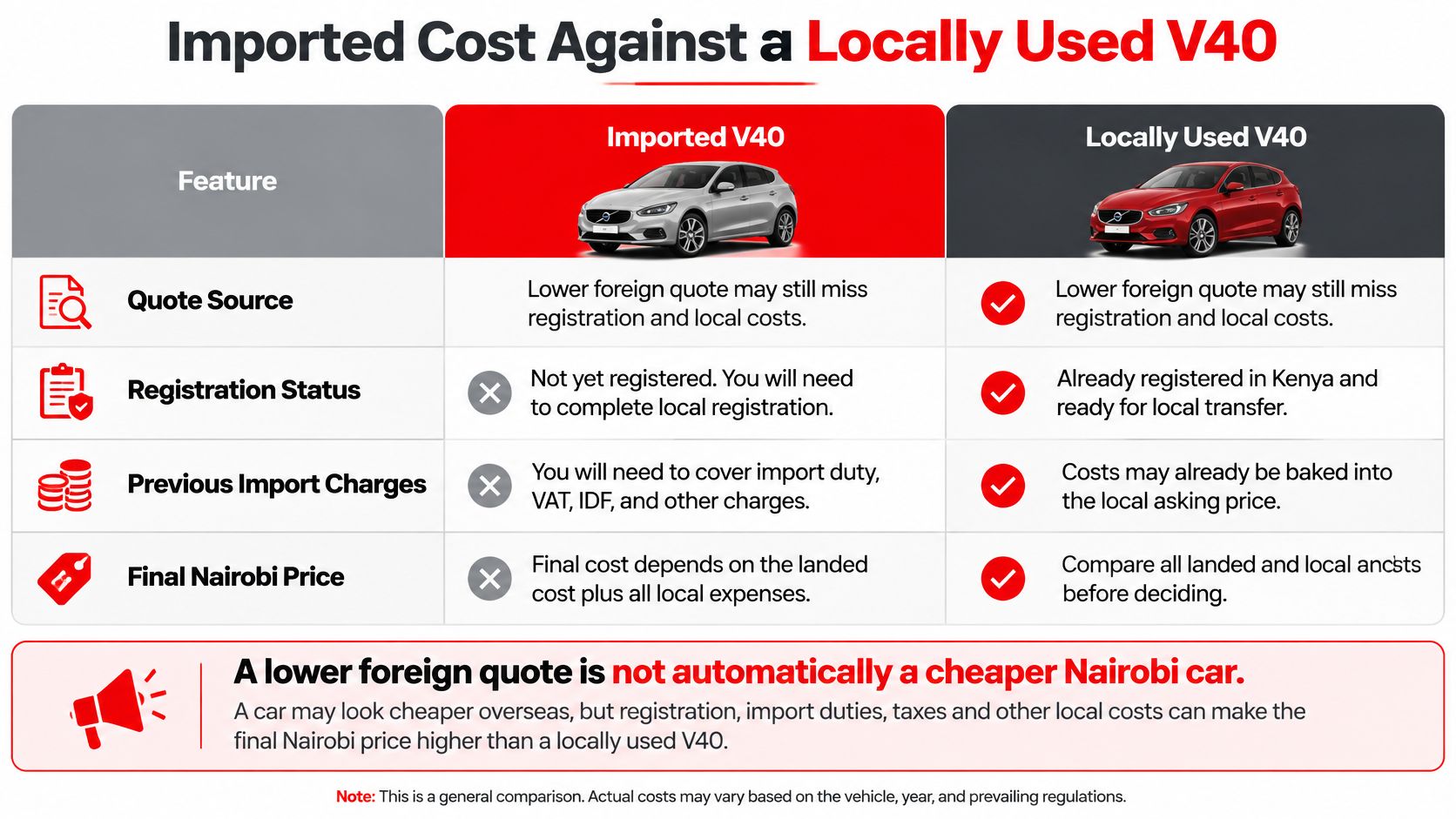
Why the invoice isn't the whole calculation
The KRA customs-valuation guidance states that customs value is the vehicle's cost, insurance and freight value, and that this may be determined using the Current Retail Selling Price matrix and valuation template. A low overseas invoice therefore doesn't guarantee an equally low taxable value.
Say you negotiate a substantial discount abroad. If the assessed customs value doesn't fall in line with your invoice, the tax saving you expected may not materialise. Shipping, clearance and local preparation can then remove the apparent advantage.
Don't build an import budget by converting the foreign price into shillings and adding an optimistic allowance. Get a written calculation for the specific chassis, including its engine specification and assessed value. Confirm current rates and the applicable CRSP treatment with KRA or a licensed clearing agent.
Ask for a Nairobi-ready total
A foreign-used car physically parked in Kenya still needs documentary verification. Its location doesn't prove that every import charge has been settled. For a locally registered car, the logbook and import history should also stand up to scrutiny.
Our locally used Volvo listings provide a useful starting point if you want to compare registered vehicles rather than overseas quotations. Confirm the inclusions on the individual vehicle before making a payment.
Buyers remain responsible for registration fees, logbook transfer charges, number plates, insurance, inspection or roadworthiness certification and, for imported units, import duty and port fees. Establish which costs have already been paid and which remain yours.
Compare two Nairobi-ready totals, not a Japanese or UK purchase quote with a Kenyan logbook price.
Request the total in writing. It should distinguish the vehicle price from outstanding statutory charges, administrative costs and any preparation work you've agreed to fund.
Model Years That Can Still Be Imported
The Kenya Bureau of Standards vehicle-inspection code states that passenger vehicles more than eight years old from the year of first registration aren't allowed for importation, and that manufacture and first registration must be no more than one year apart. Verify the current applicable requirements before committing money.
The important date is first registration, not the seller's description of the shape or the badge on the boot. A car can look like a later version while its original registration record places it outside the permitted window.
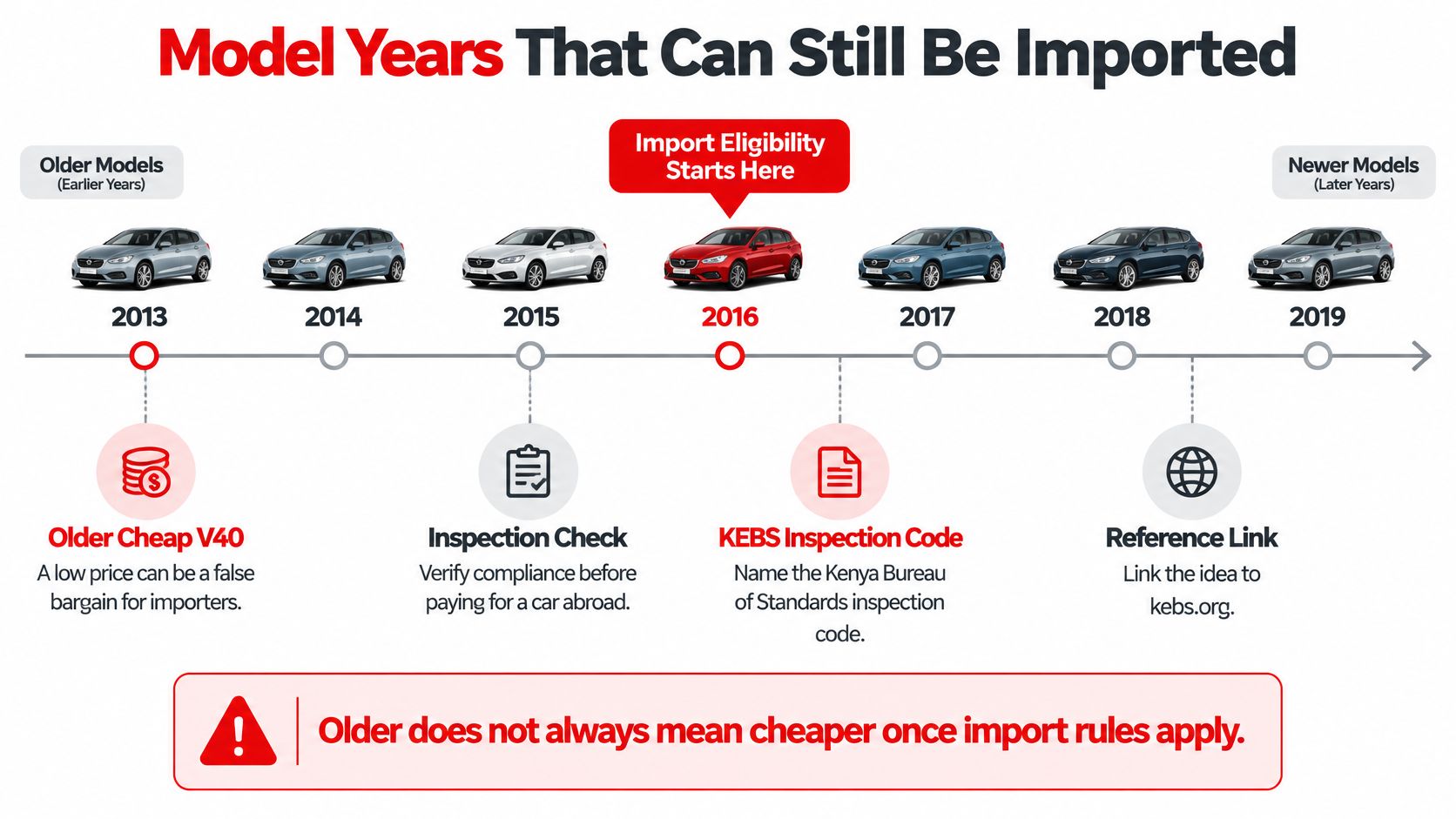
Work from documents, not advert wording
For a purchase during this guide year, calculate the car's age from its original first-registration year against the applicable import window. Don't count backwards from its model name, and don't assume that paying or shipping before a deadline guarantees eligibility on arrival.
There's another trap: manufacture and registration can be too far apart. Consider a hypothetical car built in one year but first registered several years later. Its registration may appear recent enough, yet the gap between the dates can still make it unsuitable for importation.
Before paying a deposit, obtain:
- Original registration record: Confirm the first-registration date and vehicle identity.
- Manufacture details: Establish when the specific vehicle was built.
- Export documentation: Check that the identity and dates agree across the file.
Don't accept a cropped advert image as a substitute for legible documents. The details must belong to the actual chassis being purchased, not another vehicle of the same model.
Separate import eligibility from local ownership
An older V40 already registered in Kenya is a different purchase. The import-age restriction concerns bringing a vehicle into the country, not buying an older registered car locally.
That distinction explains why an affordable local car may be a sensible option even when a similar overseas example can't be imported. Its condition and maintenance requirements still need careful assessment.
Our guide to imported cars for sale in Kenya gives additional context for buyers considering imported stock. For eligibility, rely on current official requirements and the specific vehicle file.
If the dates don't fit, walk away before shipping. A deposit is easier to protect before the vehicle starts moving than after a compliance problem appears at the port.
What the V40 Costs to Run in Nairobi
Keep a first-year maintenance reserve outside the purchase price. There isn't a responsible universal shilling allowance without knowing the engine, mileage and outstanding work. Get a condition-based estimate instead of spending your entire budget at the yard.
Start with insurance. Obtain third-party quotations through a licensed insurer, and understand what each policy covers rather than choosing solely on the premium. Then establish whether the service book calls for immediate work.
Build the reserve around the actual car
Budget for a diagnostic scan even if the dashboard appears normal. A Volvo-capable scan should interrogate relevant control modules, not just read a generic engine fault. Stored faults can reveal problems that aren't obvious during a short drive.
Next come tyres, the battery and suspension bushes. Check tyre age and condition as well as tread, test the battery properly, and have the suspension inspected on a lift. Nairobi speed humps and rough surfaces make loose bushes and damaged dampers particularly unwelcome.
- Servicing: Price the correct oil specification, filters and any scheduled work supported by the vehicle's records.
- Wear items: Separate work needed immediately from items that can sensibly wait.
- Parts lead time: Confirm availability before assuming a warning light is a quick, inexpensive fix.
Filters, brakes and sensors may need ordering for a particular variant. Compared with more common Japanese hatchbacks, you should be more deliberate about confirming parts support. A cheap car that can't be used while you wait for the right component isn't a useful saving.
Judge fuel use and resale realistically
A compact hatchback can make sense for commuting, but don't budget from an unverified fuel-economy figure. Congestion, short trips, tyre condition and engine health all affect consumption. A tired turbocharged petrol engine won't recover its condition merely because you drive gently.
Ask a mechanic to investigate abnormal consumption rather than accepting it as normal for a European car. Misfires, boost leaks and neglected servicing deserve diagnosis, not a fuel-budget adjustment.
The cheaper advert isn't the cheaper car when its purchase price and necessary repairs exceed the cost of a cleaner example.
Be conservative about resale. A premium hatchback needs a buyer who wants that specification and accepts its maintenance requirements, so don't assume a quick sale at your preferred price.
We can value your current vehicle and buy it as a trade-in. That may reduce the cash you need for the change, but keep the maintenance reserve intact rather than using the entire trade-in value to stretch your purchase budget.
Checks and Negotiation at the Viewing
Arrive with the vehicle details, a torch and an independent mechanic who can assess the car and use suitable diagnostic equipment. Ask for a cold start before your visit. A vehicle already warmed up can conceal starting behaviour you need to evaluate.
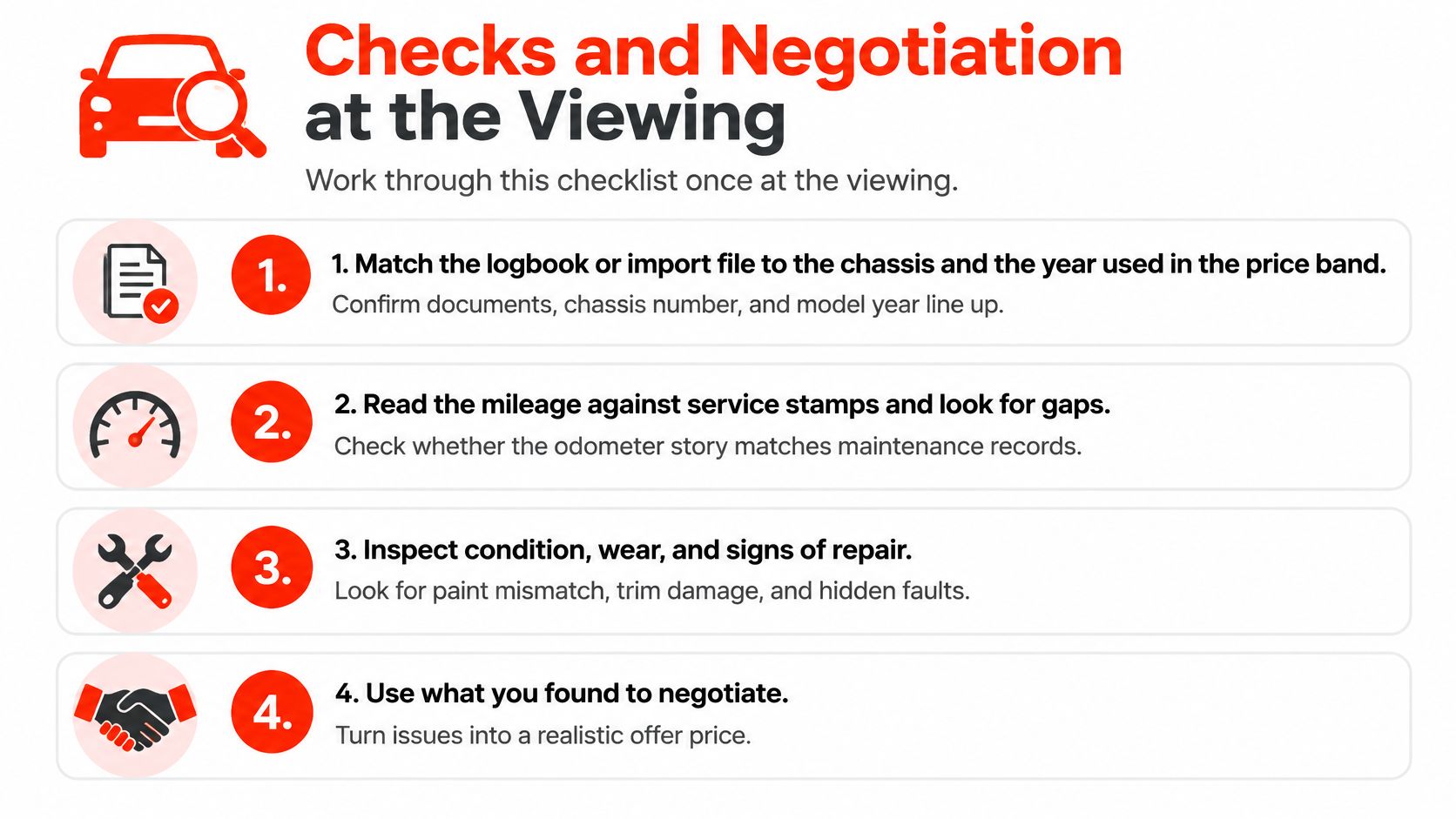
Complete the inspection before making an offer
- Match the identity. Compare the logbook or import file with the chassis and the year used for valuation. An unexplained mismatch stops the purchase, rather than earning a discount.
- Read the mileage against servicing. Look for dated invoices and gaps between stamps. Missing evidence means you can't price it as a fully documented car.
- Cold-start the engine. Listen for abnormal turbo whistle and timing-area rattles, and watch for smoke. Require diagnosis before assigning a repair allowance.
- Test the automatic properly. Assess slow shifts, reverse engagement and kickdown on a safe road test. Delayed engagement or harsh changes need specialist assessment.
- Scan the electronics. Read stored faults across the relevant modules. A dark dashboard doesn't prove the absence of a problem.
- Check suspension and tyres. Turn at low speed, listen over uneven surfaces and inspect beneath the car. Uneven wear needs an explanation before you budget only for replacement tyres.
- Look for accident repairs. Examine panel alignment, beneath the bumpers and under the boot floor. Structural concerns are grounds to walk away.
- Identify parts due. Ask which Volvo-specific components need replacement and confirm availability. Uncertain supply should affect whether you proceed, not just your opening offer.
Negotiate from costs, not percentages
Start from the guide row matching the car. Adjust for its specification, documented use and the mechanic's written findings, then establish what the seller's figure includes.
A missed service belongs in the immediate-work allowance. A questionable gearbox needs a diagnosis and a credible repair quotation, not a token reduction. Undocumented mileage removes the basis for a low-mileage premium.
Don't bargain every fault into acceptability. Some problems can be priced; uncertain identity, unresolved clearance and serious structural damage shouldn't become negotiating games.
Ask for written confirmation of the vehicle price, included items and outstanding charges. If the seller can't establish clearance or local registration, don't agree to a Nairobi-ready figure.
A clean car near the upper guide can be better value than a visibly cheaper car needing major work. Your strongest negotiating position is a documented reason for the offer, plus the willingness to leave.
Where to Check Live Volvo V40 Prices
For a Volvo V40, start with an asking price tied to a specific car, not a broad budget estimate. Browse the current Volvo listings and compare each V40 by year, engine, mileage and registration status. Those details help explain why two cars with the same model name may sit at different points in the price band.
Choose a listing that fits your shilling budget, then ask about any missing specifications before discussing a discount. An enquiry should be about that individual vehicle, not whether every V40 can be bought for the same amount.
Turn the listing into a viewing
Use the advert to decide whether the car merits an inspection. Photos show equipment and general presentation, but they cannot confirm gearbox condition or replace a maintenance file.
Our showroom is at Garden City Mall in Nairobi, where you can view vehicles in person. Call or WhatsApp +254 758 243 058 to ask about availability and arrange a visit.
- Buying support: Ask about viewing the vehicle and its written sale terms.
- Changing cars: Request a valuation and discuss using your current car as a trade-in.
- Selling first: The dealership buys vehicles directly from owners.
A valuation can help you work out the cash difference between your current car and the V40. Keep that calculation separate from the V40's condition. A convenient trade-in does not make an expensive fault less important.
Before agreeing a figure, confirm that the car is still available and check the written sale terms, including any advertised warranty or discount. An earlier listing or general price guide is not a promise of today's offer. Check the year, engine, mileage and registration details against the specific car you plan to view.