

 SIGN UP
A used Subaru Forester in Kenya now sits roughly between KSh 2.6 million and KSh 5.2 million for model years 2015 to 2022. If you want a straight answer, that's the bracket you should work with before you start inspecting trims, mileage, import status and condition.
A buyer in Nairobi looking at Foresters on a rooftop yard will usually be comparing a tidy older 2015 or 2016 unit against a newer 2019 to 2022 import, then wondering why two cars that wear the same badge can be separated by millions. The answer is simple, age, spec, supply and compliance all hit the final figure. That is exactly why forester price in Kenya should never be treated as one flat number.
Introduction
You can stand at a Nairobi showroom and see two Subaru Foresters that look close enough to be cousins, then find the prices are nowhere near each other. One is a plain 2015 unit with modest equipment, the other is a newer, better-specced import with a cleaner history and a bigger tax burden. The badge does not set the price, the exact car does.
That is the right way to shop this model. You need the year, trim, engine, import status and paperwork before you can judge whether the asking price is fair. A Forester is one of those SUVs where the name attracts buyers, but the specification and landed cost decide whether the deal makes sense.
Practical rule: never ask for a “Forester price” without asking for the exact year, trim and engine. That's how buyers overpay.
The figures below give you a realistic Nairobi frame of reference, then the rest of the guide breaks down what moves the number up or down, what the import rules allow and what usually goes wrong on a used Forester. If you are cross-shopping SUVs, keep your eye on total cost, not just the sticker.
Pricing Overview by Year and Trim
What the year tells you
A Forester's model year sets the starting point, but it does not determine the final Nairobi asking price. A Kenya-focused price compilation placed the median asking price at about KSh 5.175 million for 2022 models, KSh 3.8 million for 2019 models, KSh 3.48 million for 2018 models, KSh 2.95 million for 2017 models, KSh 3.0 million for 2016 models, and KSh 2.6 million for 2015 models. [Kenyan Forester price compilation]
| Model Year | Median Price (KSh) |
|---|---|
| 2022 | 5,175,000 |
| 2019 | 3,800,000 |
| 2018 | 3,480,000 |
| 2017 | 2,950,000 |
| 2016 | 3,000,000 |
| 2015 | 2,600,000 |
The 2016 median sitting slightly above 2017 is a useful warning. Year-by-year figures reflect the mix of trims, mileage, condition and import paperwork available at the time, not a fixed depreciation formula. A well-kept older Forester can therefore cost more than a newer example with a weaker history.
Kenyan import rules also affect the final number. A newer import may fall into a different tax bracket, while import status and cleared paperwork can separate two cars with the same model year. For a live asking price, check current stock at Brill Motors instead of relying on an old yard figure.
Why trim and specification matter
Trim changes the value buyers receive. A base 2.0i is easier to price, while a 2.0XT turbo commands more because it offers stronger performance and usually carries richer equipment. Compare engine, drivetrain and equipment before deciding that one year is overpriced.
A clean, lightly used, well-documented Forester should outprice a rougher car from the same year. Condition drives the premium.
Mileage, accident history, import status and service records all belong in the price assessment. A locally used Forester may look expensive beside a foreign-used unit, yet make better financial sense if it is available immediately, has reliable records and needs less corrective work. Nairobi buyers should price the car they can verify, not the cheapest listing they can find.
Market Trends and Pricing Factors
Supply shock changed the market
The sharp move in used Forester prices during 2023 was not random. Business Daily reported in February 2024 that a used Forester was selling for about KSh 3.5 million, up from less than KSh 3 million the previous year, and linked the jump to a KSh 26 billion reduction in second-hand vehicle imports. [Source]
That matters because supply is not just an abstract economic idea, it shows up on the yard sticker. When fewer imports land, used stock tightens and the cleaner examples get pulled up first. Nairobi buyers feel that pressure quickly, especially on popular family SUVs like the Forester.
What else pushes the number around
Trim popularity matters. A higher-spec or turbo variant will usually hold a firmer asking price than a basic trim because buyers know they are harder to find and more desirable. Exchange-rate weakness and import volume shifts also feed directly into landed cost, then into retail pricing.
Straight advice: if the price looks unusually low, assume there is a reason and inspect harder. Cheap Foresters usually hide a problem in the history, the paperwork or the mechanicals.
If you're thinking in terms of value, don't look at the badge first, look at the supply conditions around that car. The same market that makes a Forester expensive can also make certain trims easier to move quickly, which is why a well-kept unit rarely sits long. For a broader SUV pricing view, a related model guide such as Brill Motors' Subaru BRZ price article shows how model-specific pricing works across the Subaru range.
Landed Cost Calculation and Tax Impact
Why the foreign price is only the starting point
A Japan or auction price is only the first line of the calculation. KRA bases vehicle taxation on the CIF value, then applies import duty, excise, VAT, Railway Development Levy and Import Declaration Fee on the relevant expanded tax bases. Engine capacity affects excise. KRA lists 20 percent for vehicles up to 1,500 cc and 25 percent above 1,500 cc. [Source]
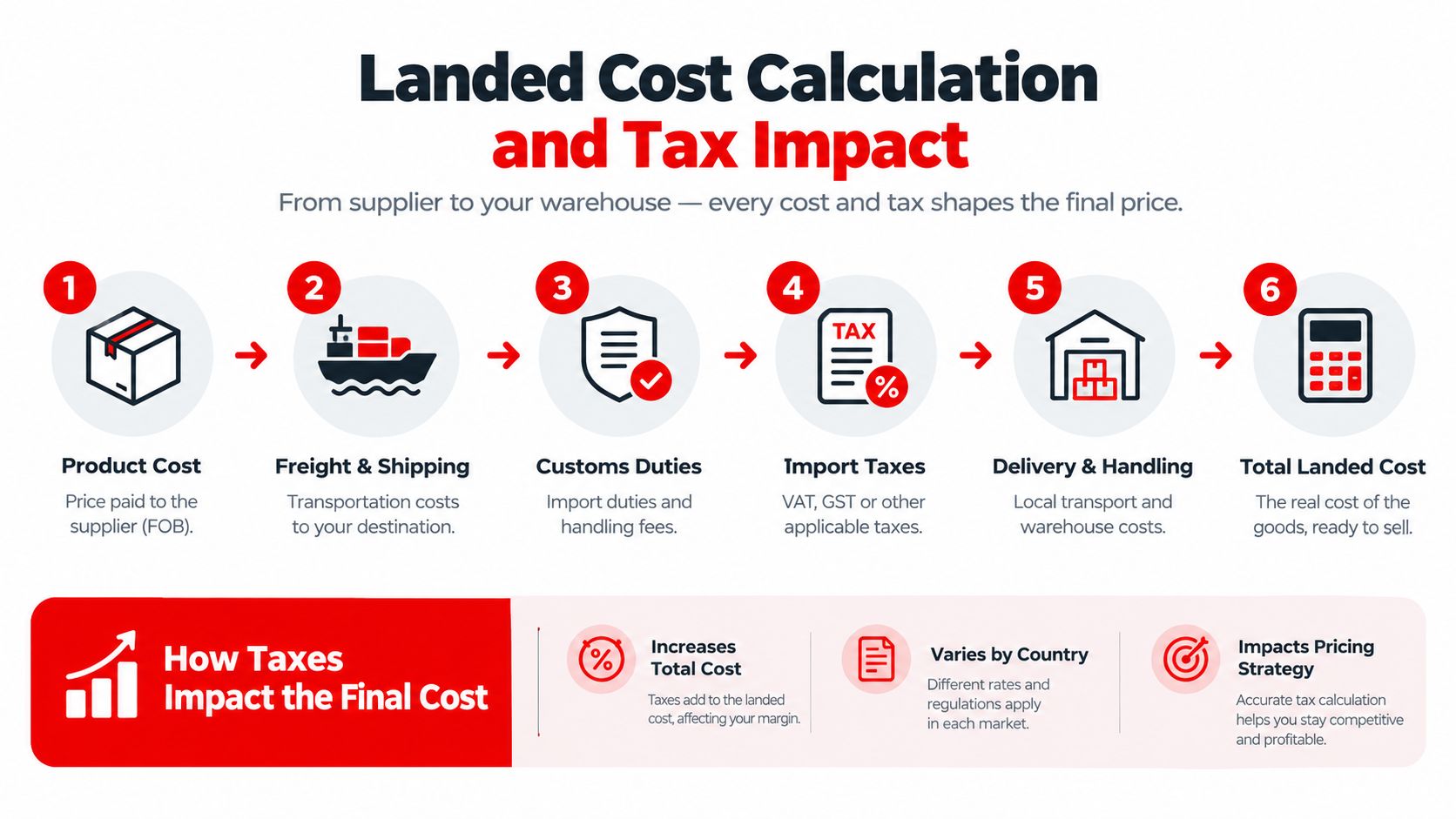
For a worked example, take a 2.0-litre Forester with a CIF of KSh 1.8 million. At a 25 percent import-duty rate, duty is KSh 450,000. Excise at 25 percent on the applicable base is KSh 562,500. RDL and IDF at 2.5 percent each add KSh 45,000 apiece, while 16 percent VAT adds KSh 464,400. The tax stack is KSh 1,566,900, putting the vehicle at KSh 3,366,900 before port charges, clearing, registration and reconditioning.
Use a worksheet matched to the car
Write down CIF, duty, excise, VAT, RDL, IDF and every local charge. Then add registration and repairs. Do not use a generic Forester estimate for a turbo or higher-output trim, because engine capacity and the vehicle's exact customs treatment can change the result.
Exchange rates and sudden shortages of clean stock can also push the final Nairobi asking price higher. Compare the completed landed figure with local listings, including the Brill Motors Toyota cars price list, then have a licensed clearing agent verify the assumptions before you pay. A low foreign price is meaningless if the tax worksheet and compliance costs have been ignored.
Legal Import Requirements for Forester
Before you release a deposit, verify that the Forester can legally enter Kenya. Kenya Bureau of Standards requirements state that a used vehicle must be no more than eight years old from first registration. The gap between manufacture and first registration must be less than one year. It must also be right-hand drive, meet Euro IV emissions requirements, and pass KEBS inspection before registration. [Source]
Arrange the pre-export inspection through a KEBS-approved inspection centre in the exporting country before the vehicle is shipped. Ask the seller or exporter for the booking details and inspection report, then confirm the vehicle identity, dates and inspection status before paying.
A clean-looking listing proves little. A Forester can appear attractive online and still fail clearance because its registration history is incorrect or it has been converted from left-hand drive. Check the paperwork before you inspect the car or negotiate the Nairobi price.
Verify the dates and documents
The foreign registration date carries more weight than the model badge. If the manufacture and registration dates do not align, or the vehicle falls outside the age rule, you are buying a clearance problem. The importer carries that risk, not the seller after payment.
Buyer's rule: messy documentation is a reason to walk away. A low-priced Forester that cannot clear cleanly is not a bargain.
Confirm right-hand drive, Euro IV compliance and inspection evidence before money changes hands. Compliance comes before cosmetics, trim level or a tempting auction price.
Common Technical Issues with Subaru Forester Models
The faults that keep showing up
The Forester earns its reputation because it drives well, but used examples do develop familiar problems. On older cars, buyers should be alert to head gasket concerns, while turbocharged versions can be harder on upkeep and punish neglect. CVT wear, suspension noise and electrical quirks also come up often enough that no buyer should ignore them.
What to listen and feel for
A strained transmission will feel wrong under load, especially if the car hesitates, shudders or responds unevenly in traffic. Suspension issues show up as knocks over potholes, a loose front end or uneven road feel. Electrical faults are usually smaller individually, but together they tell you the car has had a hard life.
- Engine behaviour: listen for rough idle, smoke and knocking when cold and when warm.
- Transmission feel: check for hesitation, jerking or delayed response under acceleration.
- Suspension noise: drive over rough tarmac and listen for clunks from the front or rear.
- Electrical consistency: test AC, windows, lights and dashboard functions one by one.
- Fluid condition: inspect for leaks underneath and around the engine bay.
The point is not to panic every time you see wear. It is to avoid buying a Forester that needs immediate major spending on top of the purchase price. A good one feels tight, quiet and predictable. A tired one advertises its problems the moment you drive it.
Buyer Inspection Checklist for Forester
Start with identity and structure
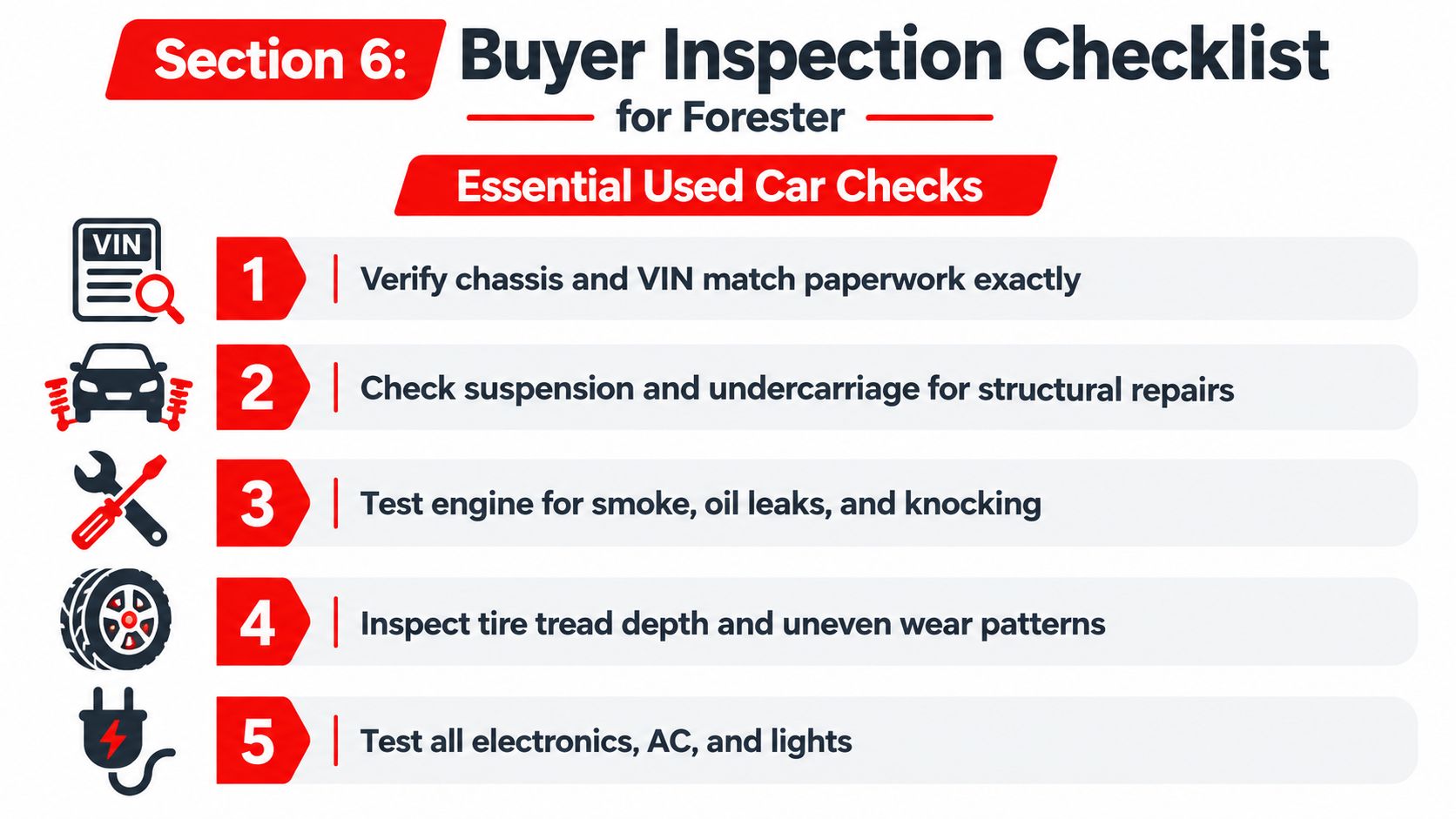
Imported vehicles must undergo KEBS inspection before registration, and KEBS says the buyer should verify that chassis numbers match import and registration documents, inspect the undercarriage for structural repairs, and confirm there is a valid roadworthiness certificate from an approved inspection centre. [Source]
Start there, then move around the car with intent. If the chassis, paperwork and inspection status do not line up, stop the deal before you waste time on cosmetics.
Then test the car like you mean it
Take the Forester on a road with bad surfaces and a clear stretch of tarmac. You want to hear suspension knocks, feel the steering return properly and notice whether the transmission behaves cleanly under light and hard throttle. If the car feels vague, don't explain it away.
- Paperwork first: confirm the chassis number, registration history and roadworthiness certificate.
- Undercarriage check: look for fresh welds, bent metal, oil seepage and uneven repairs.
- Drivetrain test: accelerate gently and firmly, then watch for shudder, flare or lag.
- Electrical sweep: test AC, infotainment, windows, mirrors, lights and warning lamps.
- Body and cabin review: look for overspray, poor panel alignment, water entry and worn controls.
If you want a yard comparison point while you inspect, Brill Motors stocks SUV inventory in Nairobi, and its SUV for sale guide is a useful reminder to compare several vehicles before committing. The same inspection discipline applies whether the Forester is locally used or imported.
Maintenance and Running Cost Expectations
Budget for use, not just purchase
A Forester is not a car you buy on price alone. You also need to plan for fuel, service work, tyres, brake wear and insurance, because those costs decide whether the car stays comfortable to own after the purchase. The turbo trim will usually ask for more attention than the simpler non-turbo option.
The clearest practical difference is running discipline. A well-kept non-turbo Forester is easier to live with, while a turbo model rewards careful servicing and sensible driving. If the previous owner skipped maintenance, your first few months can become expensive quickly.
What to expect from ownership
Use the service history to judge the car, not the seller's confidence. A Forester with regular fluids, clean transmission behaviour and tidy suspension will normally cost less to keep stable than a neglected one. That is the true reason buyers should treat maintenance history as part of the price.
The cheapest Forester on the yard is often the most expensive one to own.
Fuel use depends on engine choice and driving style, so don't budget as if every trim behaves the same. City traffic, tyre pressure and servicing quality all affect what you spend over time. The right question is not “Can I afford the sticker?” It is “Can I afford the whole car?”
Quick Reference Summary of Forester Prices
Use forester price in Kenya as a screening guide, not a final valuation. 2015 to 2017 examples often fall between KSh 2.6 million and KSh 3.0 million, while 2018 and 2019 units commonly sit around KSh 3.48 million to KSh 3.8 million. Newer 2022 stock can reach about KSh 5.175 million. These market markers come from the pricing evidence used in the overview above. [Source]
Use this budget rule: the older bracket suits buyers prioritising entry cost, the mid-range bracket offers a newer base for comparison, and the 2022 bracket demands close scrutiny of trim, import cost and vehicle condition. A turbo or higher-spec trim can command more than a similar-year non-turbo unit, so year alone cannot set the value.
Tax and compliance can shift the final figure well beyond the foreign purchase price. Duty, excise, VAT, Railway Development Levy and Import Declaration Fee all belong in the landed-cost calculation, as explained in the tax section above. [Source] Used imports also need the required age, registration and roadworthiness compliance before clearance. [Source]
Before negotiating in Nairobi, verify the year, trim, engine, chassis record, undercarriage, transmission operation and inspection papers. A local car needs a credible service record. An import needs clear compliance paperwork as well. Supply shortages can lift asking prices, but they do not excuse hidden mechanical work.
Conclusion and Next Steps
The Forester makes sense in Kenya when you buy the right year, trim and history, not just the badge. Treat the price as a result of supply, taxes, compliance and condition, then inspect the car like the money is yours, because it is. That approach keeps you out of trouble and puts you in a stronger bargaining position.
Brill Motors can help you compare live Forester stock, arrange a showroom viewing at Garden City Mall and support you with valuation, trade-in or financing if you need it. Check the current listings at Brill Motors and visit the yard with this guide in hand.